
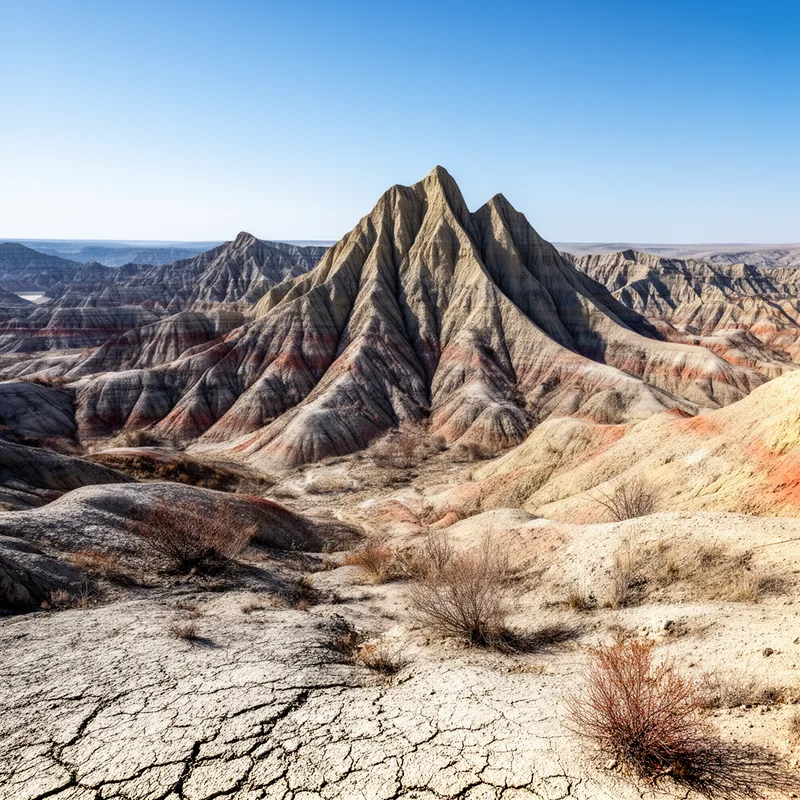
badlands
- noun
- /ˈbædˌlændz/
 :
tierra baldía
:
tierra baldía
- Many tourists visit the Badlands National Park in South Dakota to experience these unique geological formations.
Examples
-
Visitors often take photographs of the intricate patterns of ridges and gullies found in the badlands.
-
Farming is nearly impossible in the badlands because of the poor soil and severe erosion.
-
The rugged badlands stretched as far as the eye could see, with no sign of human habitation.
-
The badlands are a fascinating place to explore.
-
Many animals adapt to life in the badlands.
-
Farming is nearly impossible in the badlands because of the poor soil and severe erosion.
-
The rugged badlands stretched as far as the eye could see, with no sign of human habitation.
Synonyms

 58
4.9
58
4.9

A large empty area of land with no plants or people
Compounds

A national park in South Dakota with eroded rock shapes and many ancient fossils

How Barren

Surface Forms
Morphology
Etymology
Badlands comes from the plain English parts bad and land, literally meaning 'bad land' or land that is 'not good' for farming or living. That's why badlands now describes dry, worn places with steep slopes, deep valleys and little or no plants.