
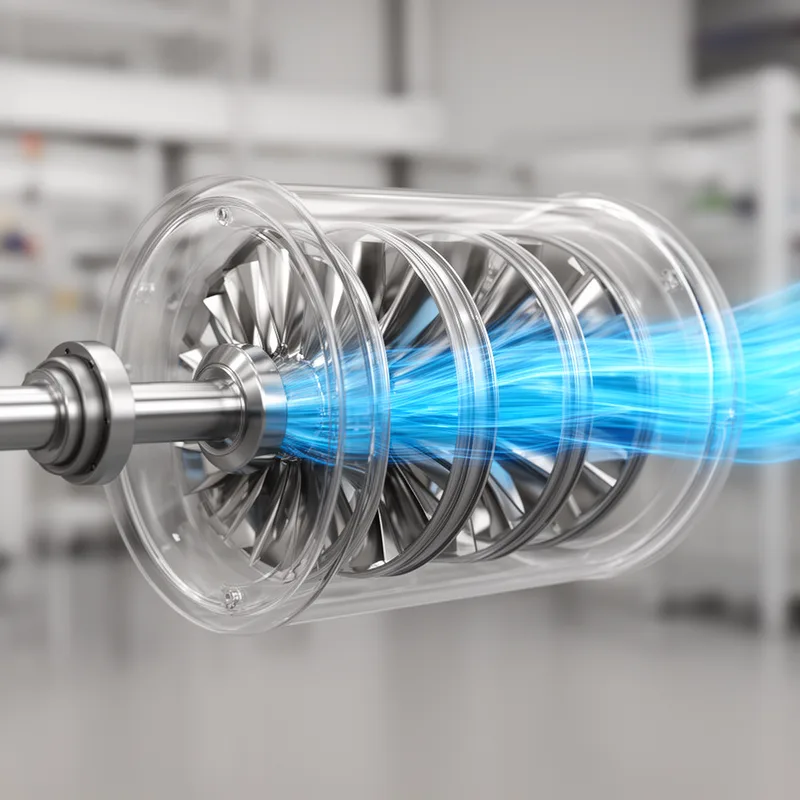
axial flow turbine
- noun
- /ˈæksiəl floʊ ˈtɜːrbaɪn/
- Specialized
- The axial flow turbine is widely used in modern jet engines due to its efficiency.
Examples
-
Unlike a radial design, an axial flow turbine allows the fluid to pass straight through along the shaft.
-
Engineers chose an axial flow turbine for the power plant to accommodate the high flow rate.
-
The axial flow turbine is essential for modern jet engines.
-
An axial flow turbine converts energy efficiently.
-
The axial flow turbine efficiently generates electricity in large power stations.
-
In a jet engine, the axial flow turbine helps propel the aircraft by converting fuel energy into thrust.
-
Engineers are designing a new axial flow turbine to improve the performance of wind power systems.
Synonyms

 91
3.9
91
3.9

A machine that uses moving water, steam, or air to turn blades and make power

A machine with blades that makes the shaft turn when air or gas flows along it
Surface Forms
Morphology
The term is directly compositional: 'axial' (along the axis) + 'flow' (movement of fluid) + 'turbine' (a device that converts fluid energy) yields the meaning of a turbine where the working fluid moves parallel to the axis. Although technical, this formation follows regular English compounding patterns (and similar constructions exist in other languages), so a learner who knows the constituent words can infer the meaning.
Etymology
Axial flow turbine is named from a simple picture: the flow of air or water moves along the machine's middle line, the axis, so it passes 'straight through' the turbine. That's why axial here means 'along the axis' and the name refers to a turbine where the fluid moves 'along the shaft'.