
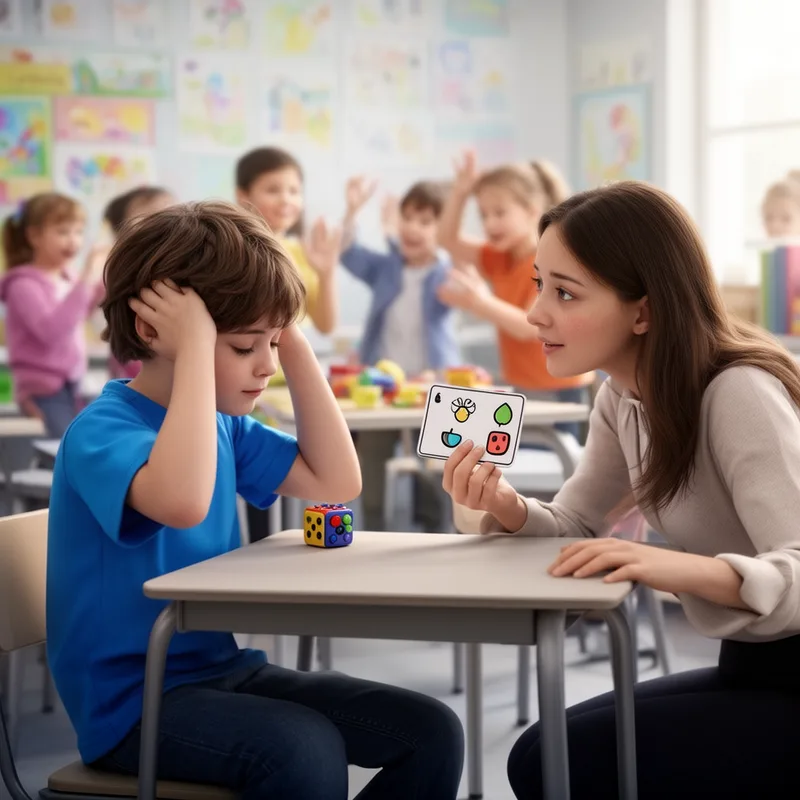
autistic behavior
- noun
- /ɔːˈtɪstɪk bɪˈheɪvjər/
- Specialized
- Children with autistic behavior often struggle with social interactions.
Examples
-
Strategies for addressing autistic behavior in the classroom are discussed during the workshop.
-
The school's staff receive training on recognizing and supporting students who display autistic behavior.
-
Therapists work with children to help them understand and manage autistic behavior.
-
Many therapists study autistic behaviors to develop better treatment plans.
-
Parents often seek guidance on how to manage their child's autistic behavior during social gatherings.
-
Teachers are trained to recognize autistic behavior in students to better support their learning needs.
-
Understanding autistic behavior can help others interact more effectively with individuals on the autism spectrum.
Synonyms



 1
7.7
1
7.7
A behavior often seen in people with autism, for example repeating actions or finding talking to people hard
How Noticeable
- Specialized

- Specialized
1
7.7
Surface Forms
Morphology
The phrase is a straightforward adjective + noun composition: 'autistic' denotes traits linked to autism and 'behavior' denotes actions or responses, so the combined meaning is simply actions characteristic of autism. This compositional pattern is common cross-linguistically and follows standard English grammar, so a B1 learner who knows both words can reliably infer the MWE meaning.
Etymology
Autistic behavior comes from the word 'autism', which comes from an old Greek word meaning 'self'. The word autistic suggests a strong focus on one's own inner world and behavior means actions or reactions, so the phrase describes the common actions and reactions people with autism often show.