
audio frequency


 1
4.0
1
4.0
- noun
- /ˈɔːdioʊ ˈfrikwənsi/
- Specialized
- Higher audio frequencies are often associated with treble sounds that can create clearer musical notes.
Loading YouTube…
Watch on YouTubeWhenever you have two audio frequencies that are close together, they vibrate because sound moves in waves.
- Whenever you have two audio frequencies that are close together, they vibrate because sound moves in waves.
- So this is again, this the the, the sound so we can take the signal and we can play it in an audio frequency so that you can hear it.
Examples
-
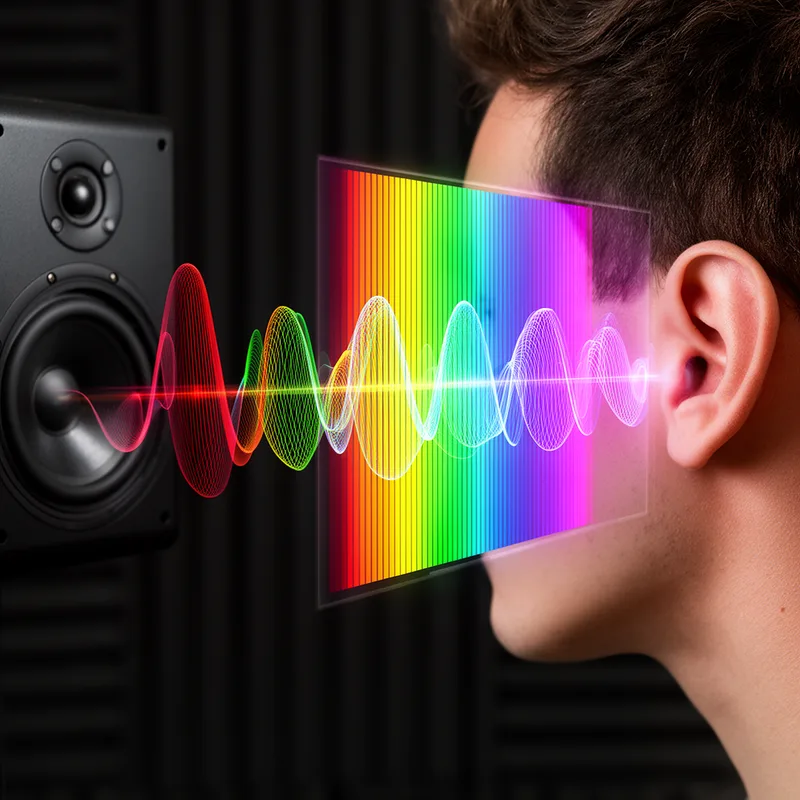
The human ear can perceive sounds within the range of audio frequency, typically from 20 hertz to 20,000 hertz.
-
When activated, the device sends an audio frequency that reduces the brain to its animalistic core.
-
And then we have the minimum and maximum audio frequency that we want to play back.
-
So this is again, this the the, the sound so we can take the signal and we can play it in an audio frequency so that you can hear it.
-
Whenever you have two audio frequencies that are close together, they vibrate because sound moves in waves.
-
Understanding audio frequency is essential for audio engineers when mixing music to ensure the best sound quality.
How High
- Specialized
13
3.7
 6
4.1
6
4.1
- Specialized
1
4.0
3
4.5
- Specialized
3
8.2
Surface Forms
Morphology
The meaning 'a frequency of sound' is directly and compositionally derived from 'audio' (sound) combined with 'frequency' (rate), following a common noun–noun pattern. This is a straightforward, cross-linguistically common concept built from basic vocabulary, so a B1 learner who knows both constituents would readily infer the MWE meaning (though the specific Hertz range is technical).
Etymology
The term audio frequency combines audio (meaning 'sound you can hear') and frequency (meaning 'how often' something repeats). So audio frequency tells us how many times per second a sound wave repeats, usually between 20 and 20,000 times per second for humans to 'hear'.