
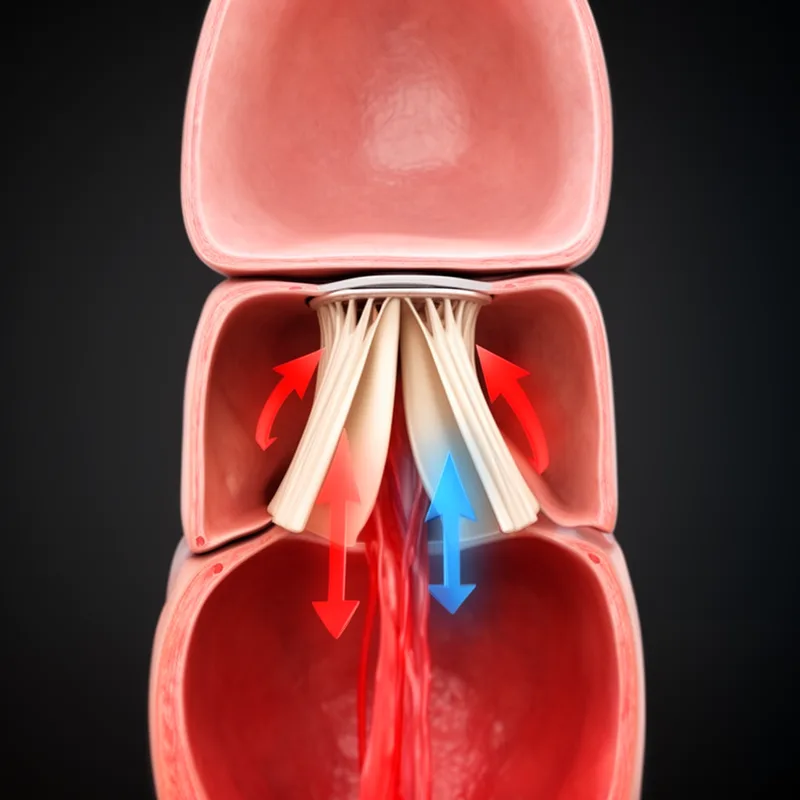
atrioventricular valve
- noun
- /ˌeɪtriəʊvɛnˈtrɪkjʊlər vælv/
- Specialized
- Surgery was required to repair his faulty atrioventricular valve.
Examples
-
Damage to the atrioventricular valve can disrupt normal blood flow in the heart.
-
The atrioventricular valve prevents blood from flowing back into the atrium.
-
The doctor explained how the atrioventricular valve prevents blood from leaking back into the atrium.
-
Can you explain the function of the atrioventricular valve?
-
The atrioventricular valve ensures that blood flows from the atrium to the ventricle without backflow.
-
During the heart surgery, the doctor explained how the atrioventricular valve regulates blood flow.
-
A malfunctioning atrioventricular valve can lead to serious heart conditions if not treated.
Synonyms

 2
3.5
2
3.5

A flap in the heart that lets blood flow one way and stops it flowing back

A valve in the heart that makes blood flow one way between chambers and major vessels
Surface Forms
Morphology
The meaning is directly and transparently derived from 'atrioventricular' (relating to the atria and ventricles) combined with 'valve' (a flow-control device): it denotes a valve associated with the atrium–ventricle region that controls blood flow and prevents backflow. This is a regular biomedical compound with clear compositional logic and cross-linguistic parallels, so a learner who knows the constituent words would be able to infer the MWE's meaning.
Etymology
The noun atrioventricular valve names a small gate between the heart's upper and lower chambers: atrioventricular links atrium, the upper chamber, and ventricle, the lower chamber, and valve means a gate. This gate lets blood move from the upper chamber to the lower one but stops it going back, so the name helps you remember it 'lets blood flow one way'.