

atma
- noun
- /ˈɑːtmə/
- Specialized
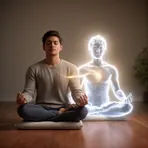
- In Hindu philosophy, the atma is considered the true self, separate from the physical body.
Loading YouTube…
Watch on YouTubeAnd that living force in Sanskrit, is this the atma or the soul?
- And that living force in Sanskrit, is this the atma or the soul?
- And that's because the energy of Maya has enveloped us, that's shrouded our atma, and we're not able to see clearly.
- It's very common for people to talk in terms of Atma, Paramatma, Ankara, this one and that one.
Examples
-
And that living force in Sanskrit, is this the atma or the soul?
-
Similarly, Ramana Maharshi (1972), one of India's greatest saints, taught a method of spiritual practice he called atma vichara, or inquiry into the nature of the unconditioned spiritual Self.
Academic text (1994) -
It's very common for people to talk in terms of Atma, Paramatma, Ankara, this one and that one.
-
It's very common for people to talk in terms of Atma, Paramatma, Ankara, this one and that one.
-
For instance, the Arabic word "HUVA," which is close to IHVH, is the 3rd person meaning "he" in English, and ATMA in Hindu, which is a name of the Spirit.
Blog text (24) -
For the one who accepts birth, life, death, and the world as reality, it is impossible to acquire Self-knowledge, Brahma Gnana, or Atma Gnana.
Blog text (8) -
And that's because the energy of Maya has enveloped us, that's shrouded our atma, and we're not able to see clearly.
-
By practicing Yoga (Maha Atma-Vikas-Yoga) with great devotion, one can become a fully developed human being, which is 'MahaDharma.'
Blog text (2) -
Understanding the concept of atma can help individuals on their spiritual journey toward self-realization.
-
Many believe that the atma continues to exist even after the body has passed away.
Synonyms


 1
9.9
1
9.9
A living soul that is separate from the body
 1
9.7
1
9.7
The soul or life force of a person

A true inner self that never ends and is not the physical body
Surface Forms
Etymology
Atma comes from the Sanskrit word ātman, which means 'self' or 'soul'; imagine it as your inner self or the part of you that does not change even when your body and thoughts do. That's why atma is used in Hindu teachings for the true, lasting soul.