
atherogenic


 1
9.6
- adjective
- /ˌæθəroʊˈdʒɛnɪk/
- Specialized
Examples
-
Although the function of Lp(a) is not established, it has thrombotic and atherogenic properties.
Academic text (1992) -
When you're in that trouble, you get atherogenic dyslipidemia, and this is the low HDL, the bad ratios, the high particle counts.
-
This risk seemed to be more pronounced in males having an increased number of atherogenic particles (apoB) and a decreased number of anti-atherogenic particles (apoA1).
Academic text (2007) -
Individuals with a high total/HDL cholesterol or LDL/HDL cholesterol ratio have a greater CVD risk because of the imbalance between atherogenic and protective lipoproteins.
Academic text (2015) -
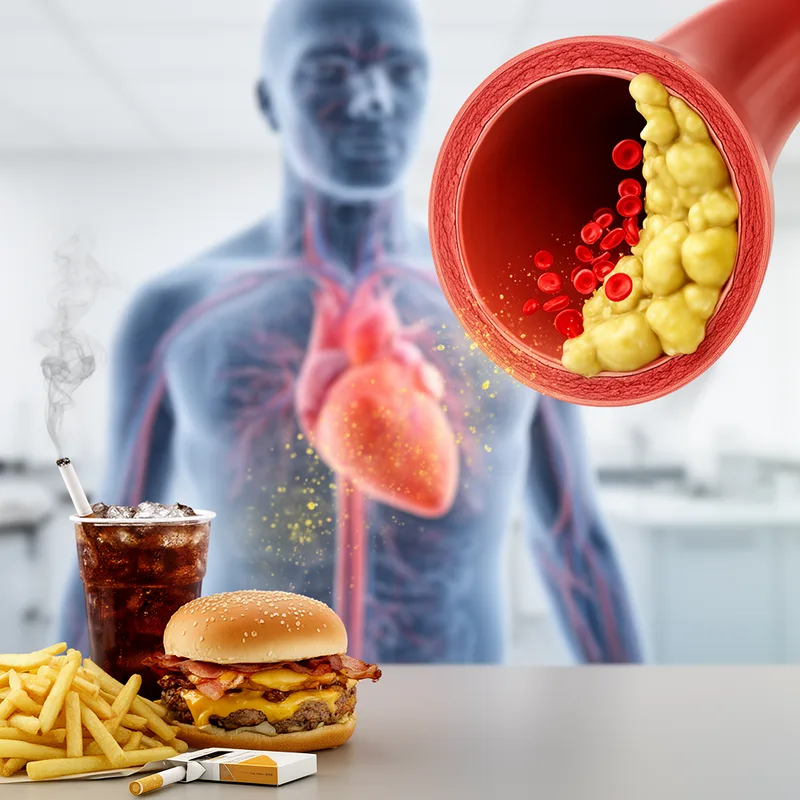
Eating too many sugary foods can lead to atherogenic changes in your arteries.
-
Regular consumption of atherogenic diets increases the risk of heart disease.
-
Research shows that certain types of fats are atherogenic and contribute to plaque buildup.
Surface Forms
Morphology
atherogenic = athero + genic
The word is a specialized medical formation built from the combining form athero- and the suffix -genic, but an average B1 learner is unlikely to infer the meaning from these parts.
Etymology
Atherogenic comes from Greek parts: athero- meaning 'porridge' (because fatty plaques looked like soft porridge) and -genic meaning 'producing', like in 'generate'. So atherogenic describes something that 'produces' fatty deposits in the arteries, which is why it is used for things that raise the risk of heart disease.