

ataxia
 3
9.9
3
9.9

- noun
- /əˈtæksiə/
- Specialized
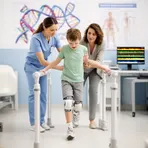
- The patient struggled to walk straight due to ataxia, often losing balance and staggering.
- monosymptomatic ataxia
- cerebellar ataxia
- ataxia and headache
Examples
-
Seven months after radiotherapy, the patient returned with acute lethargy, ataxia, confusion, and hallucinations.
Academic text (2002) -
Seven months after the initial HCMV diagnosis, he was admitted with severe ataxia, nausea, and vomiting.
Academic text (1995) -
Her history also included symptoms of sudden memory loss, ataxia, and diplopia.
Academic text (2004) -
Gave them all sorts of problems: dermatitis, ataxia, even dementia.
-
During the next 2 months, the ataxia remitted completely without sequelae.
Academic text (2012) -
Three of these patients had complaints of ataxia, imbalance, and oscillopsia.
Academic text (2003) -
The ataxia fluctuated from causing an insecure gait to walking into things and falling.
Academic text (2012) -
However, those with bilateral loss of function were typically incapacitated by imbalance, ataxia, and oscillopsia, and they did not improve very much.
Academic text (2006) -
In our case, the patient's ataxia and left third-nerve palsy were consistent with a mass effect from a tension pneumocephalus.
Academic text (2008) -
Neurologic alterations generally involved motor impairment with ataxia affecting mainly the hind limbs.
Academic text (2013)
Synonyms

A problem that makes it hard to control body movements, causing unsteady walking

A condition where muscles do not work together when you try to move, causing unsteady walking

Loss of control of muscle movements makes walking unsteady and staggering
Antonyms

Compounds
- Specialized
A rare inherited disease that causes loss of coordination and muscle weakness from childhood

- Archaic
A problem with the nerves in the spine that makes walking unsteady and causes sharp pains
- Specialized
Loss of control of muscle movements makes walking unsteady and staggering

- Specialized
A brain condition passed from parents that causes balance, walking, speech, and eye problems

- Specialized
A disease passed down in families that slowly damages the nerves in the spine, causing weak muscles and walking problems
How Coordinated

Surface Forms
Morphology
Etymology
The word ataxia comes from Greek parts a- meaning 'not' and taxis meaning 'order' or 'arrangement', and it shares the same root as the word tactic. So ataxia literally means 'no order', which helps you remember it as a loss of muscle coordination that makes movements unsteady.