

astrochemistry
- noun
- /ˌæstroʊˈkɛmɪstri/
- Specialized
- NASA conducts groundbreaking research in astrochemistry to explore the composition of interstellar clouds.
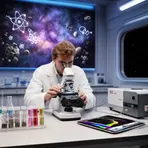
- astrochemistry lab at NASA
- astrochemistry lab
Loading YouTube…
Watch on YouTubeSecond of all, these are really nitty gritty astrobiology and astrochemistry questions.
- Second of all, these are really nitty gritty astrobiology and astrochemistry questions.
Examples
-
Is this scenario, advocated by the well-known British astrophysicist Fred Hoyle 20 years ago, see "Astrochemistry, Organic Molecules, and the Origin of Life," January/February 1978, p. 2, credible?
Academic text (1996) -
The study of astrochemistry helps us understand the chemical reactions occurring in distant stars.
-
Second of all, these are really nitty gritty astrobiology and astrochemistry questions.
-
By the way, NASA and its programs includes now astrobiology, astrochemistry, planetary geology.
-
The use of heavy-ion storage rings has contributed greatly to an improved understanding of processes in low-temperature plasmas, astrochemistry, and aeronomy.
Academic text (2002) -
2006 Winter School students identified fingerprint molecules that might exist in interstellar space as precursors to life in the astrochemistry laboratory of the Arizona Radio Observatory (ARO).
Academic text (2007) -
Scientists in the field of astrochemistry analyze the elements found in meteoroids that enter Earth's atmosphere.
Synonyms
Study of the chemical makeup and changes of matter in space
How Specialized
- Specialized

- Specialized
- Specialized
 1
4.8
1
4.8
 219
3.0
219
3.0
Surface Forms
Morphology
Etymology
Astrochemistry comes from astro- meaning 'star' and chemistry meaning 'the study of chemicals'. So astrochemistry is the study of chemicals and reactions in space, especially in stars and the clouds between them.