
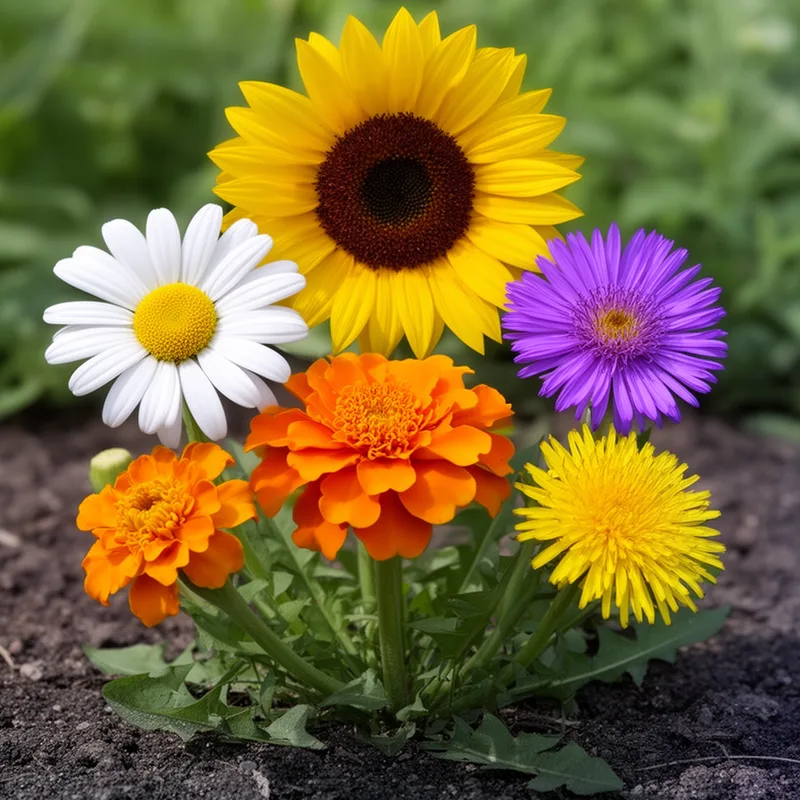
aster family
- noun
- /ˈæstər ˈfæmɪli/
- Specialized
- Many garden favorites, like asters and chrysanthemums, belong to the aster family of flowering plants.
Examples
-
The aster family includes popular flowers such as daisies and sunflowers, known for their bright colors.
-
Among the wildflowers are yellow star grass of the iris family, brookweed of the primrose family, Indian plantain of the aster family, as well as Saint Johnswort and lizard's-tail.
Academic text (1993) -
The aster family features a variety of plants that attract bees and butterflies with their vibrant blooms.
Synonyms
A large family of flowering plants like daisies, sunflowers, and dandelions
A large group of plants with flower heads made of many small flowers, like daisies and sunflowers
Surface Forms
Morphology
The phrase denotes a taxonomic grouping made from the noun 'aster' (a type of flower) and 'family' (a group), so its meaning 'the family of plants related to asters' is directly compositional. This kind of noun + family construction is common and cross-linguistically transparent, so a B1 learner who knows both words should be able to infer the meaning.
Etymology
Aster family comes from the word aster, which means 'star' because many of these flowers have a round centre and petals spreading out like a tiny star. The word family means a 'group' of related plants, so the name simply describes a group of star-like flowers.

