

associationism
- noun
- /əˌsoʊsiˈeɪʃənɪzəm/
- Formal
- Within the mechanics of associationism, the story provides us with a useful guide to the kinds of things that Walpole imagined might take place within (or be normalized by) a Gothic setting.
Examples
-
Hartleian associationism, its advocates maintain, can summon and conserve every past experience.
Academic text (2017) -
The worst sin, according to them, is that of associationism (shirk).
Academic text (2001) -
Associationism has not been able to explain individual differences in susceptibility to sexuopathology.
Academic text (2003) -
In this respect, behaviorism (also called associationism) is based on the notion that influences on human behavior come from outside the person.
Academic text (2012) -
Binet's associationism, stripped of the proviso of hereditary degeneracy, eventually became incorporated into the theory of operant conditioning and behavior modification.
Academic text (2003) -
Spirit mediums, Muslim healers who manufacture amulets, and individuals who carry these charms are all guilty of associationism because they do not pray directly to God, introducing instead "another God," as one Dan Izala put it.
Academic text (2001) -
According to Hume's associationism, the vivacity of one perception is automatically transferred to those others that are related to it by resemblance, contiguity, and cause and effect.
-
This may sound like no more than the age-old idea of associationism—that we think by jumping associatively from one thing to another.
-
Both transfer and perception are crucial, and in that respect, my thesis departs significantly from associationism.
Synonyms
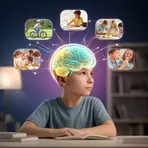
The idea that the mind works by linking ideas or past experiences
Surface Forms
Morphology
associationism = association (transparent) = association + ism
Formed by the noun 'association' plus the productive suffix '-ism' meaning a doctrine or theory, so the meaning is directly inferable.
Etymology
Associationism comes from the common word associate, which has a root meaning 'companion' or 'to join', plus the ending -ism, meaning 'a belief or theory'. So associationism is the theory that ideas or experiences become linked or 'joined' together in the mind.

