
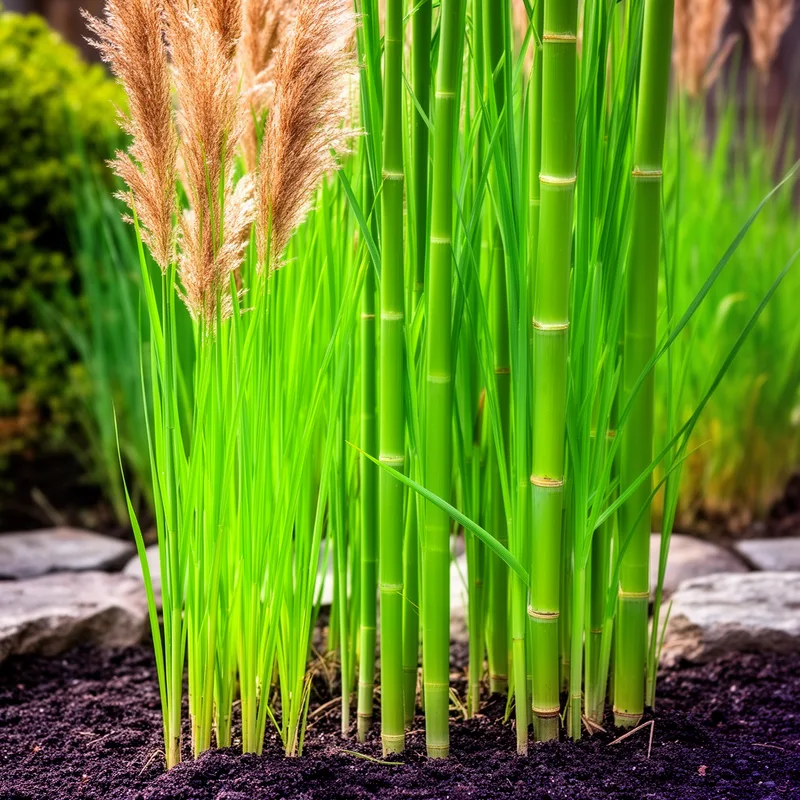
arundinaceous
- adjective
- /ˌærʌndɪˈneɪʃəs/
- Specialized
- Her garden is filled with arundinaceous plants that resemble bamboo and reeds.
Examples
-
These arundinaceous grasses thrive in wetland areas.
-
The scientist described the arundinaceous features of the rare grass species.
-
The landscaper recommended arundinaceous varieties to achieve a lush, grass-like effect.
-
The arundinaceous plants swayed gently in the breeze.
-
Her garden is filled with arundinaceous plants that resemble bamboo and reeds.
-
The landscaper recommended arundinaceous varieties to achieve a lush, grass-like effect.
-
These arundinaceous grasses thrive in wetland areas.
Surface Forms
Morphology
arundinaceous = arundin + aceous
Although '-aceous' signals a 'resembling/pertaining to' adjective, the stem 'arundin-' is not a transparent English word, so the meaning is not recoverable for most learners.
Etymology
Arundinaceous comes from the Latin root arundo meaning 'reed' and the ending -aceous meaning 'like', so it is a useful word for plants that are 'reed-like' — think bamboo or tall grasses.

