
arribada


 1
9.9
- noun
- /ˌærɪˈbɑːdə/
- Specialized
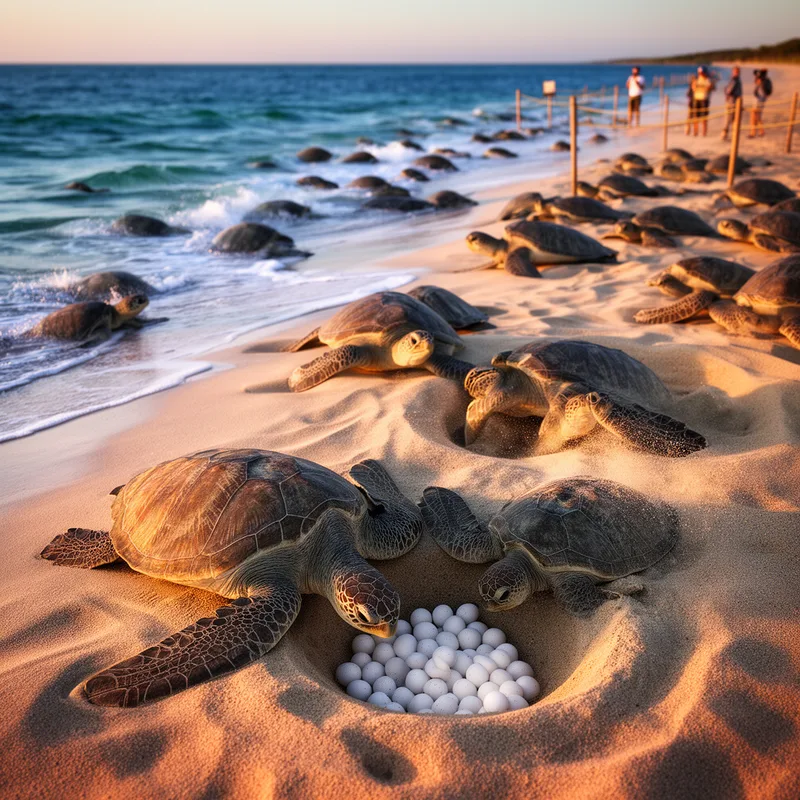
- During the arribada, thousands of sea turtles crawl onto the beach to lay their eggs.
Examples
-
The arrival, or la arribada, as it is called in Spanish, is the synchronous mass nesting of more than 150,000 sea turtles, the largest such gathering in the world.
Academic text (1995) -
On the day after the quarter moon, Jorge Ballestero, the resident biologist, predicted, "Tomorrow the arribada will really begin."
Academic text (1995) -
Then, as suddenly as it began, the arribada ends.
Academic text (1995) -
For the villagers, an arribada is part festival, part very hard work.
Academic text (1995) -
The special circumstances surrounding the arribada have enabled them to set up clear and rational guidelines for the harvest.
Academic text (1995) -
PHOTOS (COLOR): An arribada is part fiesta, part hard work.
Academic text (1995) -
To prevent this, the villagers may harvest all eggs laid during the first thirty-six hours of an arribada, about 3 million eggs in a season, or 10 percent of the 30 million laid by the sea turtles each year.
Academic text (1995) -
Only five beaches in the world are known sites of olive ridley arribadas: two in India's Orissa Province, another at a remote spot in Mexico, and at two points on the Pacific coast of Costa Rica.
Academic text (1995) -
There, the number of breeding, digging turtles is high (more than 200,000 during a peak arribada), and each wave of landing turtles may dig up and destroy a large proportion (70 to 80 percent) of eggs laid by earlier arrivals.
Academic text (1995) -
The spectacular arribada attracts many visitors who come to witness the mass nesting of turtles.
Surface Forms
Etymology
Arribada comes from the Spanish verb arribar, which means 'to arrive' or 'come ashore', and is like the English word arrive; a helpful way to remember it is to think of a very large 'arrival'. So, arribada is used for the mass event when thousands of sea turtles come onto a beach to lay eggs.