
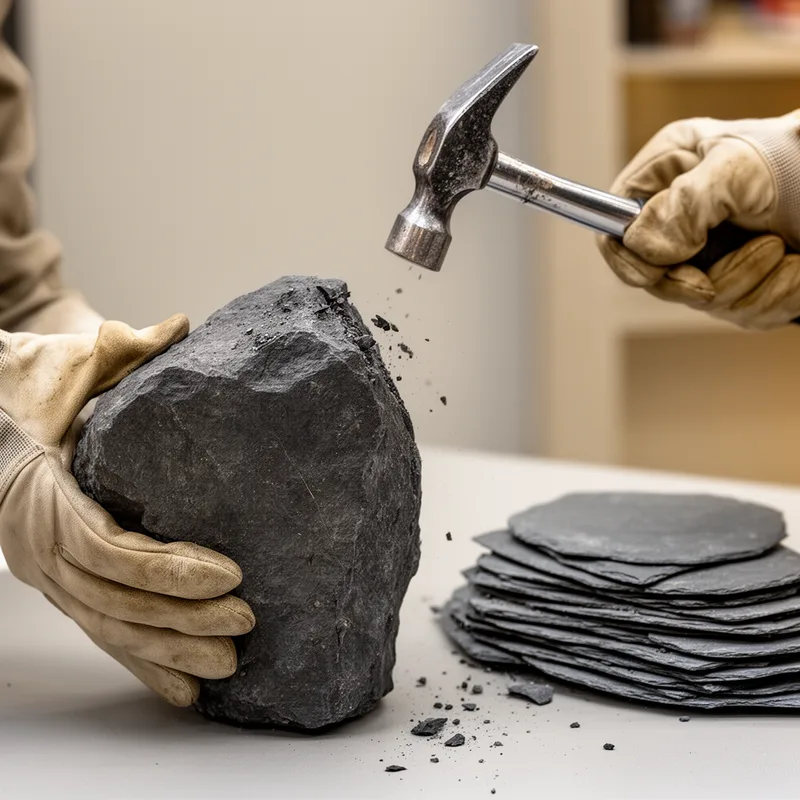
argillite
- noun
- /ˈɑrɡɪˌlaɪt/
- Specialized
- The geological survey revealed layers of argillite that were formed millions of years ago.
Examples
-
Massive destruction of farmland resulted, with numerous failures of argillite and mudstone slopes (Fig. 4).
Academic text (1991) -
Tahayren's work in argillite, gold, and silver fortunately endures as one of the strongest tangible links with the Haida past.
Academic text (1994) -
Large-scale, deep-seated earth flowage, however, is basically restricted to areas of crushed argillites and bentonitic mudstones located in East Cape and southern Hawke's Bay-Wairarapa.
Academic text (1991) -
The artist carved a beautiful statue from argillite, showcasing its smooth texture.
-
During the hike, we encountered a striking cliff made of argillite that caught our attention.
Synonyms


 1
5.5
1
5.5
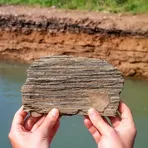
A hard rock that forms when mud or clay presses together and becomes solid
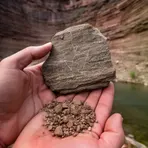
A hard rock made of tiny bits of clay pressed together

A rock made mainly of clay that forms in layers
Surface Forms
Etymology
Argillite comes from the Latin argilla, meaning 'clay', plus the rock ending -ite, as in granite. So argillite is literally a 'clay rock', which explains why it is a hard rock made of clay and does not break into thin sheets.