
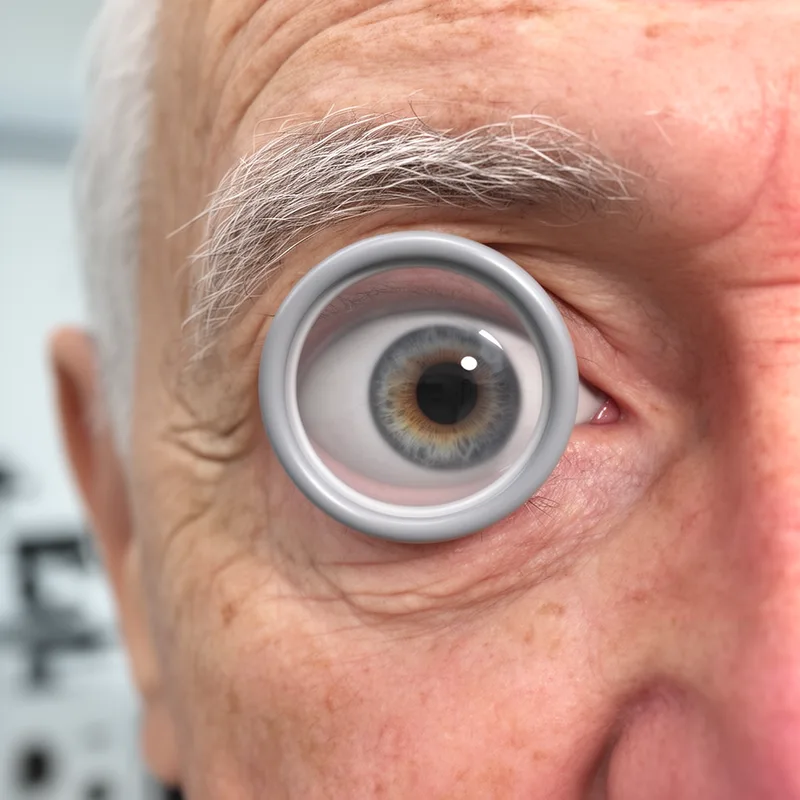
arcus senilis
- noun
- /ˈɑrkəs səˈnɪlɪs/
- Specialized
- The ophthalmologist identified an arcus senilis in the patient's left eye during the examination.
Examples
-
The presence of arcus senilis can sometimes indicate high cholesterol levels in younger patients.
-
Many older adults develop arcus senilis as a normal part of aging.
-
Although arcus senilis is common in elderly individuals, it does not typically affect vision.
-
The doctor noted the presence of arcus senilis during the eye exam.
-
The ophthalmologist identified an arcus senilis in the patient's left eye during the examination.
-
Although arcus senilis is common in elderly individuals, it does not typically affect vision.
-
Many older adults develop arcus senilis as a normal part of aging.
Synonyms


 1
9.9
A whitish arc at the edge of the front of the eye often seen in older people
Surface Forms
Morphology
arcus + senilis
The phrase is a straightforward Latin compound: 'arcus' refers to an arc/whitish deposit at the corneal edge and 'senilis' means 'of old age' (cognate with English 'senile' and similar forms in many languages). A learner who knows both constituents can directly infer it denotes an age-related arc on the cornea, so the meaning is compositional and transparent.
Etymology
Arcus senilis comes from the Latin words arcus ('arch') and senilis ('old'), and it describes a pale, curved ring at the edge of the eye. That's why the name helps you remember this harmless gray or white arc often seen in older people, which usually does not affect vision.