

arctic skua
- noun
- /ˈɑrk.tɪk skuː.ə/
- UK
- The arctic skua often chases other seabirds to steal their catch.
Examples
-
We watched an arctic skua swoop low over the water in the early morning light.
-
Several arctic skuas were spotted nesting along the rugged coastline.
-
The arctic skua is known for its aggressive behavior.
-
Many arctic skuas migrate south during the winter.
-
The arctic skua is known for its aggressive behavior towards other seabirds when it tries to steal their food.
-
During our Arctic expedition, we observed several arctic skuas hunting in pairs, which was fascinating to watch.
-
As we walked along the shoreline, an arctic skua swooped down suddenly, making a loud call to chase away a smaller bird.
Synonyms


 1
9.9
1
9.9
A large aggressive seabird like a gull that steals food from other birds
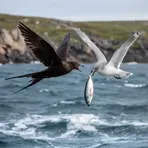
A seabird that chases other birds to steal their food on northern coasts
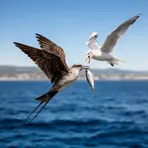
A sea bird that chases other birds to steal their food
Surface Forms
Morphology
The phrase transparently combines the adjective 'Arctic' (the northern region) with 'skua' (a type of seabird), so its meaning — a skua found in Arctic/subarctic areas — is directly derivable from the parts. This adjectival + noun composition is a common, cross-linguistic pattern, so a B1 learner who knows both constituents should understand the MWE.
Etymology
Arctic skua gets its name from two simple ideas: arctic means the cold north, and skua may come from a word used by northern fishermen for a bold, 'thieving' sea bird. Because these birds often chase other seabirds and steal their fish, the name gives a clear image of a fierce sea bird that 'robs' others.