
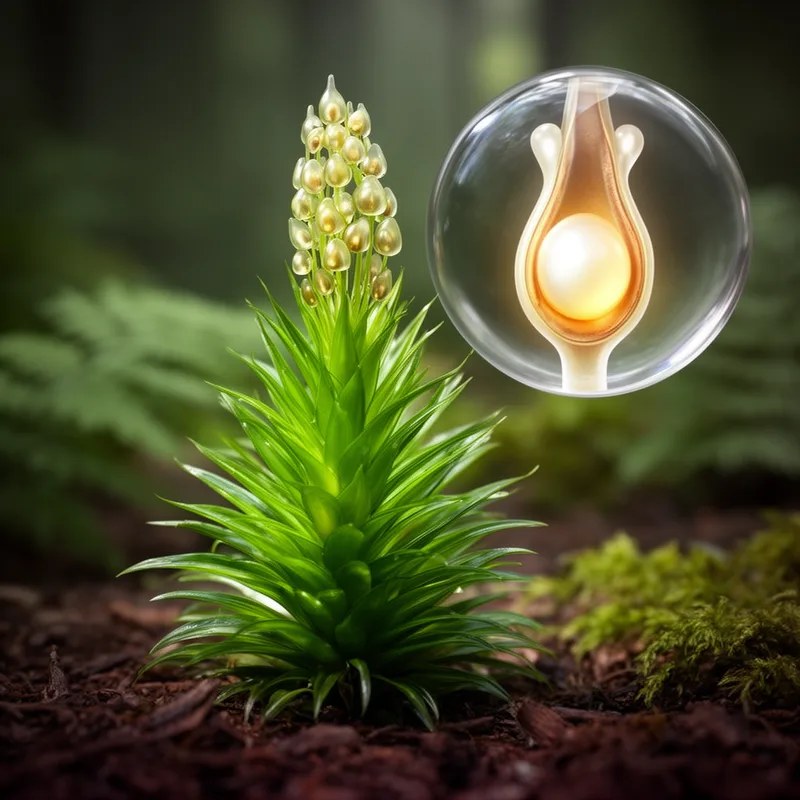
archegoniate


 1
9.9
- adjective
- /ˌɑrkɪˈɡoʊniət/
- Specialized
- In archegoniate plants, the female gametophyte develops within the archegonium.
Examples
-
The archegoniate plants reproduce using specialized female structures called archegonia.
-
The archegoniate structures in ferns are essential for reproduction.
-
Bryophytes are often studied for their unique archegoniate reproductive systems.
-
The evolution of archegoniate features marked a significant step in plant adaptation to land.
-
The archegoniate plants, such as ferns and mosses, showcase unique reproductive systems.
-
In archegoniate species, the archegonium serves as the key structure for female reproduction.
-
Scientists study the archegoniate traits of these plants to understand land adaptation.
Synonyms
Of the plant part that makes eggs in ferns and mosses
Surface Forms
Morphology
archegoniate = archegonium (semi-transparent) = archegonium + ate
Formed by adding the adjective-forming suffix '-ate' to the technical noun 'archegonium', so the morphological relation is regular but highly specialized and the -ium → -iate change may be unfamiliar to general learners.
Etymology
Archegoniate comes from Greek parts arche- meaning 'beginning' and gonia (from gonos) meaning 'birth' or 'offspring', the same idea you see in generation. So, archegoniate describes things related to the female organ in some plants that is the 'beginning' place where new plants start.