
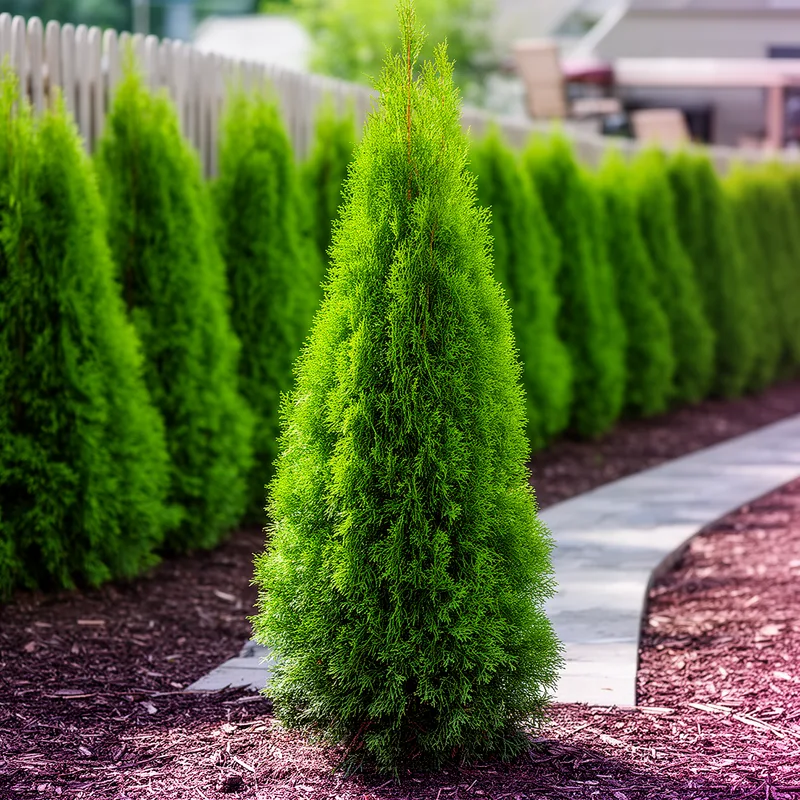
arborvitae


 1
9.9
1
9.9
- noun
- /ˌɑːrbərˈvaɪti/
- The garden was beautifully lined with arborvitae, providing a lush green backdrop.
- arborvitae hedges
- arborvitae wall
- two arborvitae
Examples
-
Beyond the granite walls and arborvitae hedges that enclosed the estates, the cottagers tried to control the landscape of Bar Harbor and Mount Desert Island.
Academic text (1993) -
So one of the zones feeds the arborvitae hedge all the way down.
-
But in planting arborvitaes, we, we kind of signed ourselves up for a yearly maintenance schedule that I was not really aware of.
-
Two mature arborvitae stood on either side of the apartment's concrete stoop, like sentinels.
Fiction book (1994) -
The neighborhood was in no hurry to reveal its secrets hidden behind the hornbeam hedges and rows of arborvitae.
Fiction book (2000) -
Her head flattened, and Koop, maddened by the interference, by the trouble, by the crisis, kicked her body off the step behind the arborvitae.
Fiction book (1994) -
Up close, the arborvitae beside the apartment door looked beaten and ragged; there were footprints in the mud around the shrubs.
Fiction book (1994) -
When they reached the landing, however, from where they could see the garden, a large arborvitae, a birch, and a silver spruce through a round window that formed a radiant frame (there was a ring of sky-blue water glass in the center), they heard voices.
Fiction book (2000) -
I planted several arborvitae as a natural privacy screen along my fence.
-
Two tall arborvitae trees swayed gently in the breeze outside the house.
Synonyms
An evergreen tree or shrub with small flat leaves often grown as a hedge
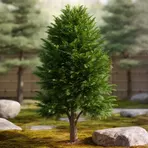
A kind of evergreen tree from Japan with attractive leaves
Compounds
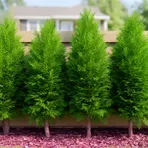
A small tree that stays green all year with tiny flat leaves used for garden hedges
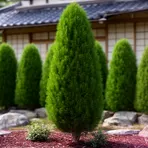
A slow growing evergreen tree from Japan grown in gardens for its dense green leaves

An evergreen shrub or small tree from Asia with dense leaves often planted in gardens
Surface Forms
Etymology
Arborvitae comes from the Latin arbor vitae, which means 'tree of life'. The vita part is the same root as in the English word vital ('life'), so the name suggests a tree linked to 'life', which is why people used it for evergreen trees and hedges.