
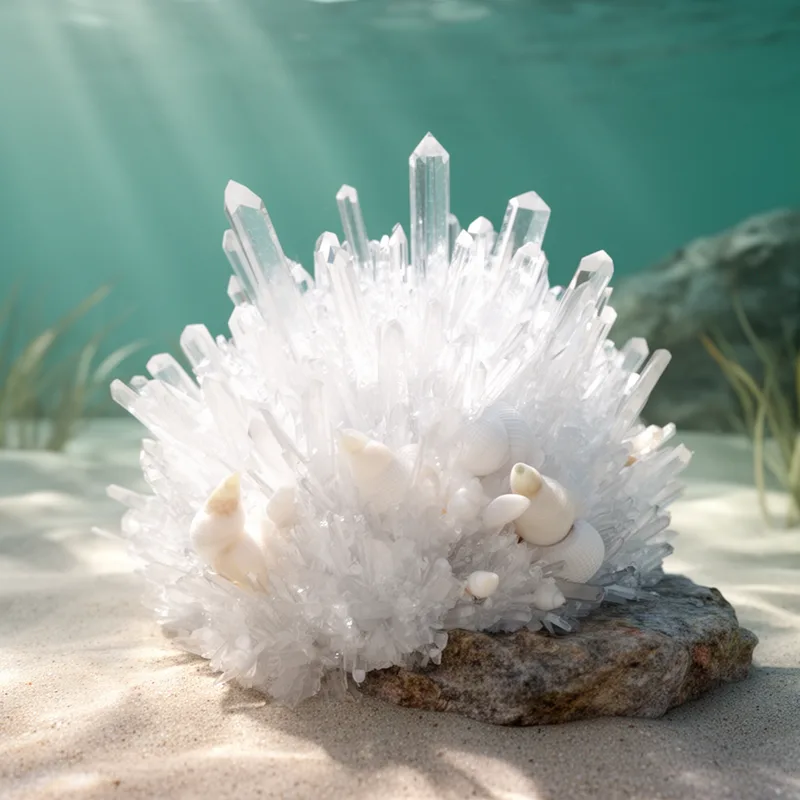
aragonite
 1
9.9

- noun
- /əˈræɡəˌnaɪt/
- Specialized
- We sampled from the top 200 m of the water column, where aragonite saturation levels were around 1, as upwelled deep water is mixed with surface water containing anthropogenic CO2.
- aragonite and calcite
Examples
-
Aragonite undersaturation is likely to affect aragonite-shelled organisms, which can dominate surface water communities in polar regions.
Blog text (14) -
Nacre mollusks make this special material by placing successive layers of aragonite interspersed with proteins.
-
Samples were treated with 3% ethanoic acid to remove calcite and aragonite from the samples.
Academic text (2018) -
Coral waste is a type of porous carbonate material, which consists of aragonite and a small part of calcite.
Academic text (2018) -
We must consider the kind of materials constituting the shells of mollusks, protists, e.g., the proportion of organisms with shells built of calcite or aragonite.
Blog text (9) -
The seashell's inner layer is made up of aragonite, giving it a smooth and lustrous surface.
-
Samples were treated with 3% ethanoic acid to remove calcite and aragonite from the samples.
-
In a seashell, the aragonite is sandwiched between microscopic layers of soft organics that provide cushioning.
How Hard

Surface Forms
Etymology
The word aragonite is named after the Spanish region Aragon, where this mineral was first found, and the ending -ite marks it as a 'mineral', like in graphite or calcite. So think of aragonite as the 'mineral from Aragon' to remember it is a natural crystal often found in shells and rocks.