
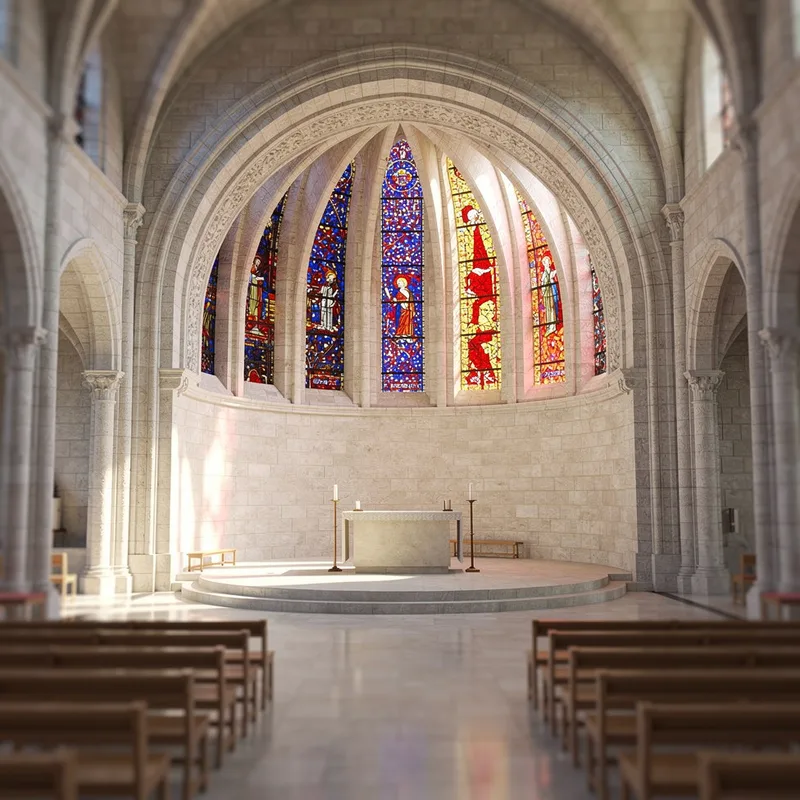
apse
 2
9.4
2
9.4

- noun
- /æps/
- Specialized
- In the Roman city, the great domed apses were added by Herodes Atticus in Pausanias' time.
- a semicircular apse
- apse wall
Examples
-
The two panels face each other, one on each side of the apse.
Academic text (1997) -
A rectangular room with an apse at the end and a a basin for cold water splashes.
-
It's in one of these apses.
-
As a rule, basilicas had an oblong plan, often with one apse added to it.
Academic text (2000) -
Few bishops were seated, but many laity, clergy, and religious had taken up positions in the apse, transepts, galleries, and boxes.
Academic text (2013) -
The incorporation of screens and apses also reflects the contemporary influence of Christian basilica architecture.
Academic text (1992) -
Bernini expanded the very same theme in his much later project for the Cathedra Petri in the apse of the basilica.
Academic text (2000) -
Furthermore, Grima believes that a large carved limestone block that serves as the threshold to an apse at yet another temple may well represent a boat.
Academic text (2004) -
The lobes of the Littlecote trefoil are perfectly semicircular inside; only the outside walls of the apses look polygonal or faceted.
Academic text (2000) -
The priest delivered his sermon from the small altar in the apse of the church.
Synonyms
 7
9.9
7
9.9
A half-round area at the front of a church where the bishop sits

A curved, domed area usually at the east end of a church where the altar stands
How Large

Surface Forms
Etymology
Apse comes from the Greek word apsis, meaning 'arch' or 'vault', which gives the image of a curved space. So an apse is the rounded, often domed end of a church where the altar stands.