

aprosexia
- noun
- /ˌæproʊˈzɛksiə/
- Archaic
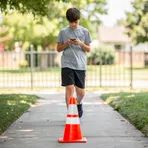
- The difficulty in paying attention is a characteristic of aprosexia, impacting both work and personal relationships.
Examples
-
Two decades after Meyer's discovery, A.A. Guye of Amsterdam connected the presence of adenoids to aprosexia, or the inability to fix attention.
Academic text (2014) -
Hypertrophied adenoids became so closely connected with inattention and dullness that people often omitted the term aprosexia and referred to the problems as "adenoids" and to the sufferers as "adenoid children."
Academic text (2014) -
In 1904, G. Hudson Makuen, a Philadelphia laryngologist, described children with aprosexia as lacking the power of attention, concentration, and memory, making them "mentally lazy" (266).
Academic text (2014) -
Individuals with aprosexia often find it hard to complete tasks due to their inability to maintain focus.
-
Recognizing aprosexia in students can help educators provide the necessary support for improved concentration.
Synonyms
 8
4.6
8
4.6

Not noticing things around you
 1
7.5
1
7.5
A tendency to lose focus because of things around you


 1
7.4
1
7.4
A state of being so distracted that you forget things and miss details

Not able to pay attention because your mind is on other things
Antonyms


How Attentive

Surface Forms
Morphology
aprosexia = prosexia (opaque) = a + prosex + ia
The negative prefix 'a-' is regular, but the root 'prosex-'/'prosexia' is an obscure medical combining form unknown to typical learners, so the overall meaning cannot be reliably derived.
Etymology
Aprosexia comes from Greek parts a- meaning 'not' and prosexia meaning 'attention'. So aprosexia literally means 'not paying attention', which explains why it names the condition of being unable to concentrate.