
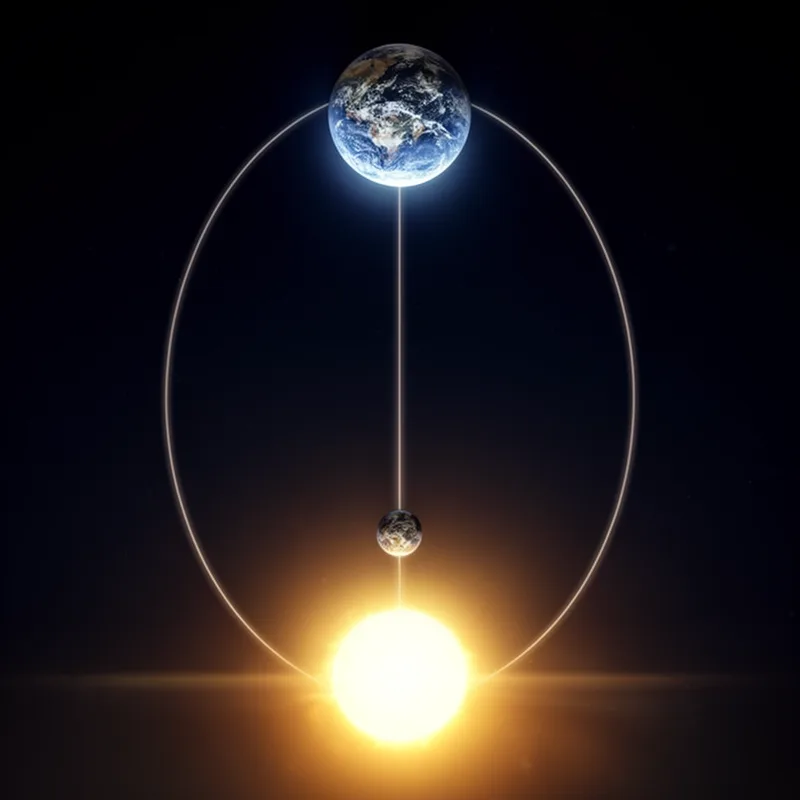
aphelion
 1
9.9
1
9.9

- noun
- /əˈfiːliən/
- Specialized
- In an elliptical orbit, the solar energy received would make the perihelion a much warmer time of the year than the aphelion.
- aphelion, farthest
- aphelion, its farthest point
- reach aphelion
Examples
-
It had passed its aphelion and was headed back toward the sun.
Fiction book (1999) -
The shower peaked in 1945 and 1986, when the comet was near aphelion, its farthest distance from the sun.
Academic text (1994) -
In 1880, Earth reached aphelion on July 3, and perihelion occurred on January 1, 1880, and on January 1, 1881.
Blog text (30) -
At perihelion, the maximum available irradiance is 717 W/m², while at aphelion the maximum is 493 W/m².
Blog text (27) -
In a couple of years, it will reach aphelion, its farthest point from the Sun.
-
Earth reaches aphelion, its farthest point from the Sun in its orbit, at 3:00 P.M. EDT.
-
Comet Giacobini-Zinner is in a 6.6-year orbit, with its aphelion lying just outside Jupiter's orbit.
Synonyms
The point in an orbit when an object is farthest from the planet or star it goes around
The point in an orbit that is farthest from the planet or star it goes around
Antonyms
Surface Forms
Etymology
Aphelion comes from Greek parts apo- meaning 'away' and helios meaning 'sun', the same root you see in helium. So it literally means 'away from the sun' and is the point in an orbit when a planet or comet is farthest from the sun.