
aphakia


 1
9.9
- noun
- /əˈfeɪkiə/
- Specialized
- After the removal of his cataract, he was diagnosed with aphakia and prescribed corrective eyewear.
Examples
-
Pseudoaphakia and aphakia were not included in the diagnosis of cataracts, but were reported as separate conditions.
Academic text (1997) -
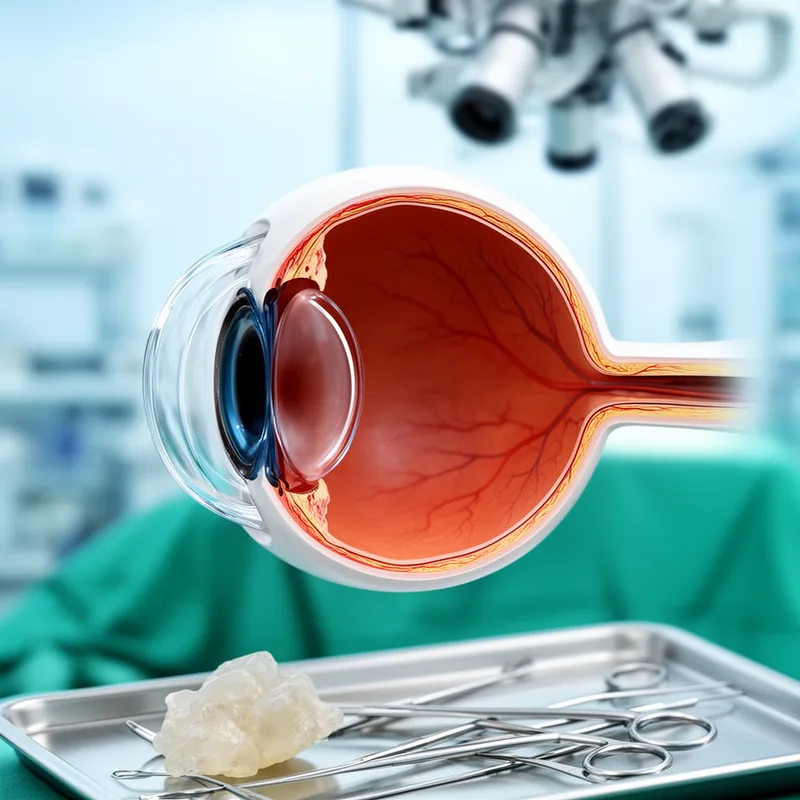
Aaphakia occurs when a person has lost the natural lens of the eye, often after cataract surgery.
-
People with aphakia may struggle with glare and require special lenses to improve their vision.
Surface Forms
Morphology
aphakia = aphakic (opaque) = a + phak + ia
The immediate base is the specialized medical adjective 'aphakic', which is not familiar to average learners, so the nominal form is not guessable from its parts.
Etymology
Aphakia comes from Greek parts a- meaning 'without' and phakos meaning 'lentil', because the natural eye lens was thought to look like a small lentil. So, aphakia literally means 'without a lens', which is why doctors use it for the condition when the eye's natural lens is missing.