
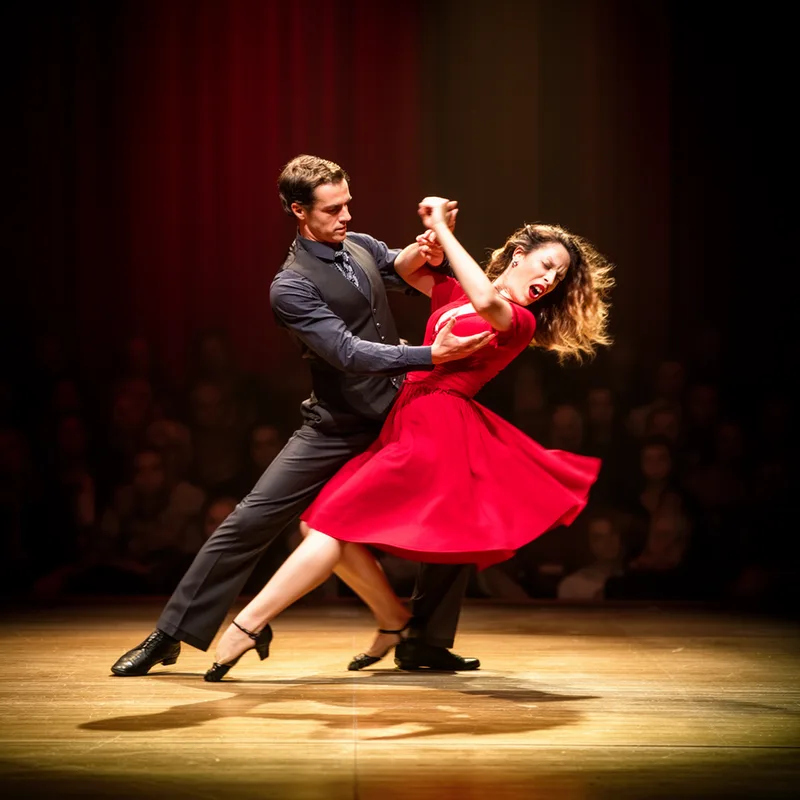
apache dance
- noun
- /əˈpæʃ deɪns/
- Archaic
- The performers captivated the audience with a passionate apache dance on stage.
Examples
-
In Parisian cabarets, the apache dance became a symbol of rebellious youth culture.
-
She studied the intricate steps required for the apache dance as part of her dance training.
-
The performers showcased an apache dance that left the audience breathless.
-
Have you ever seen an apache dance live?
-
In Parisian cabarets, the apache dance became a symbol of rebellious youth culture.
-
The performers captivated the audience with a passionate apache dance on stage.
-
She studied the intricate steps required for the apache dance as part of her dance training.
Surface Forms
Morphology
Knowing 'apache' (a member of Parisian criminal gangs) plus 'dance' gives a learner a general hint that this is a dance associated with those people, so some notion of style or association is recoverable. However the specific sense — a violent, theatrical partner dance mimicking a struggle and its historical origin in French vaudeville — is culturally specific and not directly predictable from the constituents alone, so partial inference but not full comprehension is likely for a B1 learner.
Etymology
Apache dance The noun apache dance comes from early 1900s Paris stage shows, where the word apache was used for a street 'gangster' and performers created a wild dance that looked like a real fight between a man and a woman. So today apache dance means a fast, violent stage dance that looks like a struggle.

