
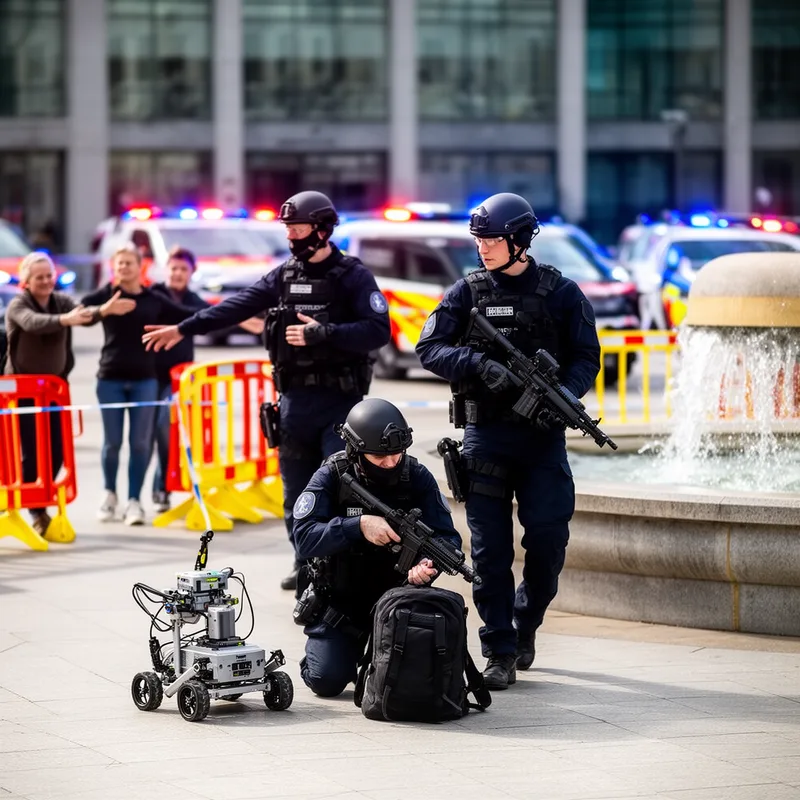
antiterror
- adjective
- /ˌæntiˈtɛrər/
- Since the terrorist attacks, the administration's policy toward North Korea has been and will be implemented in the context of an antiterror strategy, although South Korea is strongly opposed to linking North Korea to the antiterrorism campaign.
Examples
-
In public remarks later that year, he emphasized not the value of building an antiterror coalition, but rather his unilateral intention to maintain U.S. "military strength beyond challenge, thereby making the destabilizing arms races of other eras pointless."
Academic text (2003) -
The government introduced new antiterror measures to enhance national security and prevent attacks.
-
As the United States embarks on a protracted conflict with a new worldwide foe, it is seeking to mobilize all countries, including Russia, into a new antiterror coalition.
Academic text (2001) -
Some Chinese strategists argue that U.S. unilateralism has increased since September 11, but most seem to believe that the need for international cooperation in a global antiterror campaign has forced Washington to accommodate the sentiments of other countries, reversing a previous trend.
Academic text (2003) -
International collaboration is essential for effective antiterror operations against global threats.
-
The military launched an antiterror initiative to address the rising threat of extremist groups.
Synonyms

 1
3.9
1
3.9

Used to prevent or fight terrorism


 1
6.5
1
6.5
Intended to stop or fight terrorism
Help prevent or fight terrorism

Relating to actions to stop terrorism
Surface Forms
Morphology
antiterror = antiterrorism + antiterrorism (transparent) = anti
This adjective is a clipped attributive form of 'antiterrorism' and keeps essentially the same meaning.
Etymology
The word antiterror is made from the prefix anti- meaning 'against' and the word terror meaning 'extreme fear' or the violent acts that cause fear. So antiterror literally means 'against terror' and is used for laws, operations, or measures to stop or fight terrorism.