
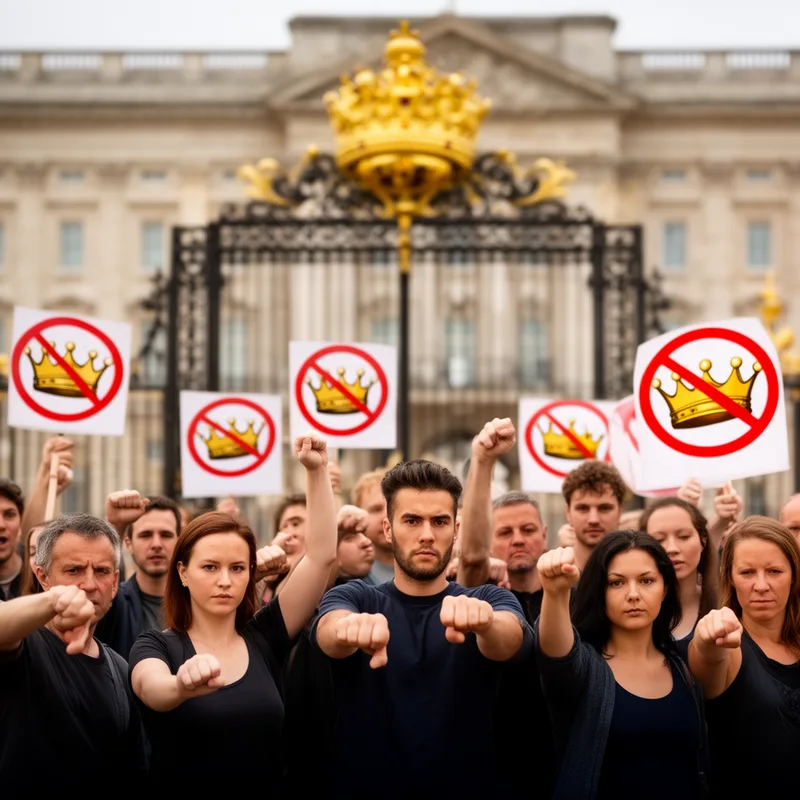
antimonarchical
- adjective
- /ˌæntɪməˈnɑrkɪkəl/
- The antimonarchical movement gained strength as citizens demanded more power in government.
Examples
-
This we call an overthrow, a noble-sounding word that suggests the posture accompanying an antimonarchical coup d'état.
Fiction book (1994) -
"How could I resist that manly eloquence?" -- and then turns the tables on her friend by accusing her husband and brother-in-law, the Lameth brothers, of not being committed enough to the antimonarchical cause.
Academic text (2011) -
The insubstantial royal pageant has faded, leaving not a rack of monarchical control, antimonarchical rebellion, nor carnivalesque terror behind.
Academic text (1997) -
Many writers in history have been known for their antimonarchical views, advocating for democracy over royalty.
-
His antimonarchical sentiments were reflected in the revolutionary pamphlets he distributed among the crowds.
Synonyms

Not supporting the rule of a king or queen
Antonyms


How Monarchist

Surface Forms
Morphology
antimonarchical = monarchical (transparent) = anti + monarch + ical
The word is formed regularly from the adjective 'monarchical' with the prefix 'anti-', so the meaning 'opposed to' is straightforward.
Etymology
The word antimonarchical begins with anti- meaning 'against' and comes from monarch, a word for 'one ruler' like a 'king' or 'queen'. So, antimonarchical means being 'against' rule by a king or queen.