
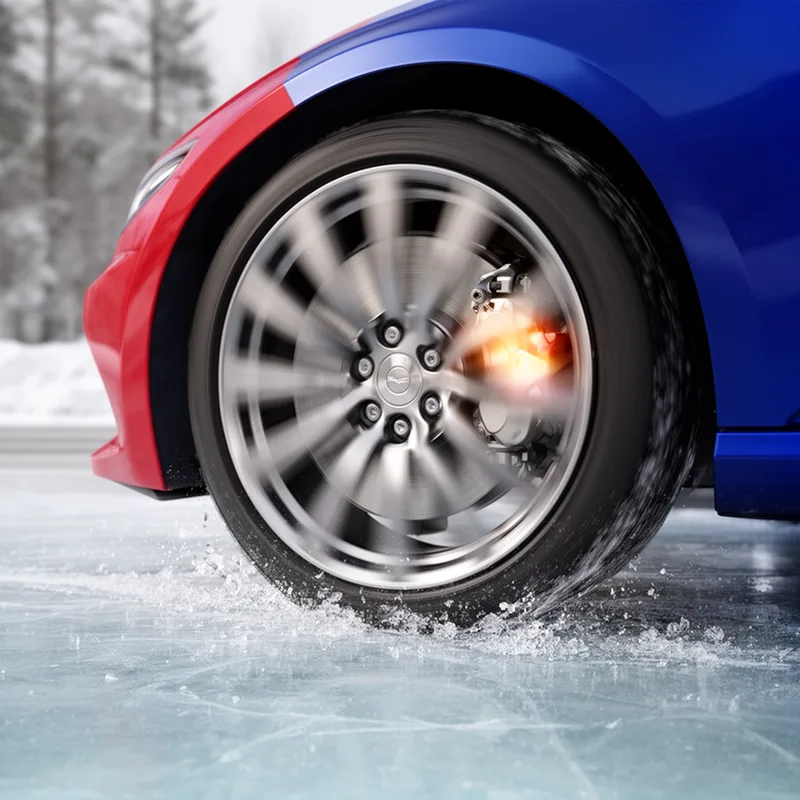
to antilock
5.5
To stop wheels from locking when a vehicle brakes
- verb
- /ˈæntiˌlɑk/
- Specialized
:
antibloquear
- Modern vehicles automatically antilock the brakes to help drivers maintain control on slippery roads.
Examples
-
If you brake suddenly on ice, the system will antilock to prevent skidding.
-
He antilocked the brakes to avoid skidding on the wet road.
-
The car's advanced safety features can antilock the wheels during emergency stops.
-
The technician antilocked the brakes to test the system.
-
Modern vehicles automatically antilock the brakes to help drivers maintain control on slippery roads.
-
If you brake suddenly on ice, the system will antilock to prevent skidding.
-
The car's advanced safety features can antilock the wheels during emergency stops.
Antonyms


Surface Forms
antilock infinitive
antilocked past
antilocked past participle
antilocking present participle
antilocks third person singular
Morphology
Etymology
Antilock comes from anti- meaning 'against' and lock meaning 'to stop moving'. To antilock the brakes is to prevent them from locking in a hard stop so the car keeps moving and you can steer.