
anthropomorphically


 1
9.1
- adverb
- /ˌænθrəpəˈmɔrfɪkli/
- Specialized
- It's not even that once God has decided to make humans a certain way, that He is required to stick with it (though we might anthropomorphically sometimes talk that way); it is that His decision in the first place spans across all times.
Examples
-
It is only natural, then, that we perceive the universe anthropomorphically.
Academic text (2000) -
Indeed, the very idea of representing the Buddha anthropomorphically was ascribed to the impact of "the mysteriously transmitted Grecian touch." (n143)
Academic text (2002) -
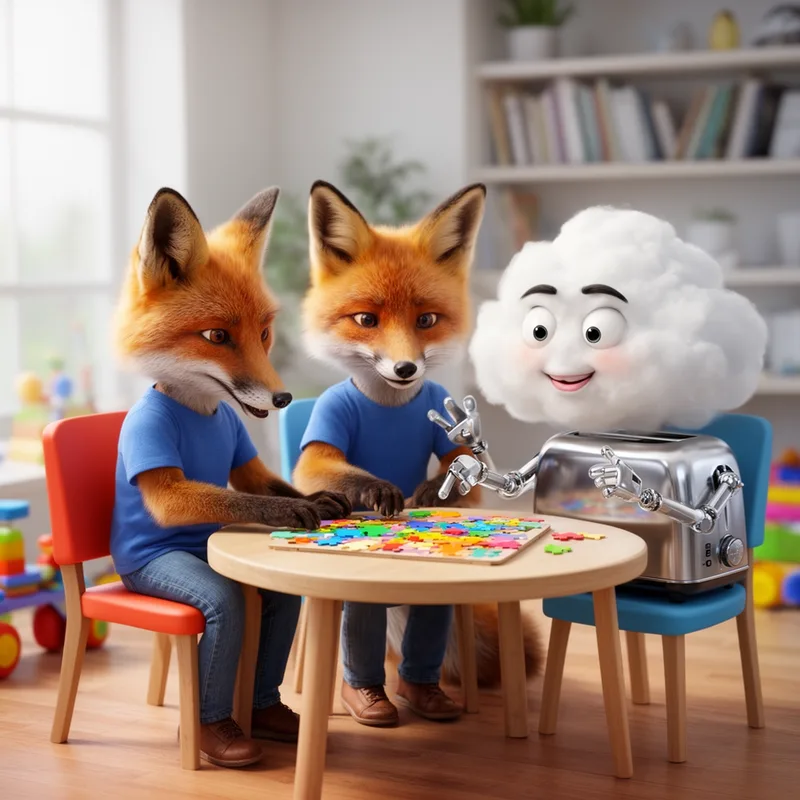
In many children's stories, animals speak and act anthropomorphically, making them relatable to young readers.
-
The movie portrayed the robot anthropomorphically, giving it emotions and human-like expressions.
-
Artists often depict nature anthropomorphically, illustrating trees and rivers as characters with feelings.
How Human

Surface Forms
Morphology
anthropomorphically = anthropomorphic (semi-transparent) = anthropo + morph + ic + ally
Forming the adverb from the adjective 'anthropomorphic' with the standard '-ally' adverbial suffix is regular and directly conveys 'in an anthropomorphic way'.
Etymology
Anthropomorphically comes from Greek parts anthropo- meaning 'human' and -morph meaning 'shape', as in the word metamorphosis which means a change of shape. So to act anthropomorphically is to give animals, objects, or ideas human form or human actions, which is why a smiling cloud or a talking animal feels like a person.