
antheridiophore
- noun
- /ˌænθəˈrɪdiəˌfɔr/
- Specialized
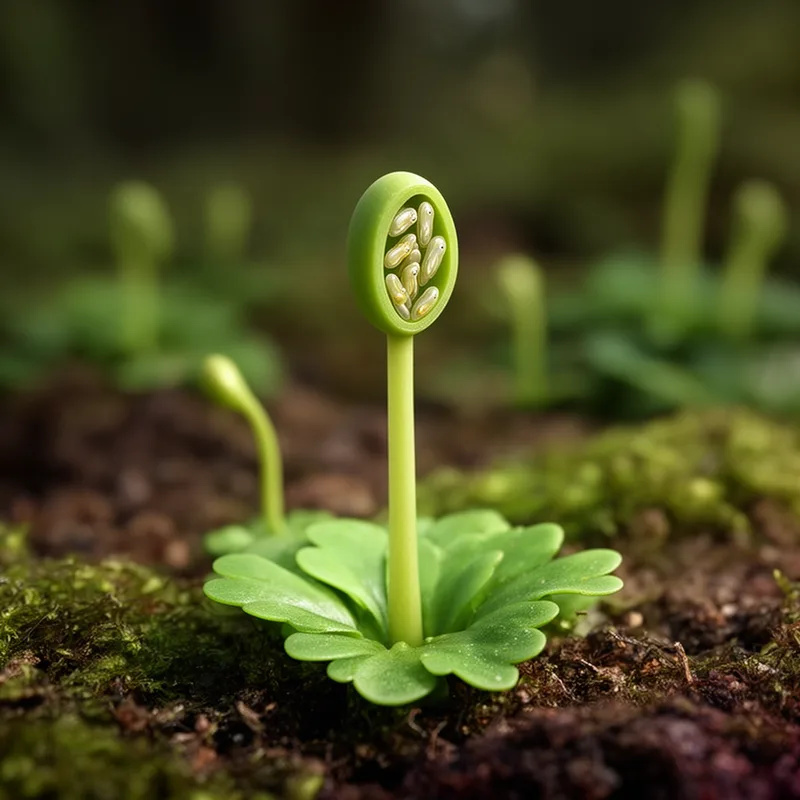
- The antheridiophore supports the antheridia at its tip in the reproductive cycle of certain liverworts.
Examples
-
Scientists examined the antheridiophore under a microscope to study the arrangement of the antheridia.
-
Mosses with distinct antheridiophores often show clear separation between male and female structures.
-
The antheridiophore is crucial for reproduction in mosses.
-
In many species, the antheridiophore supports the male gametes.
-
Mosses with distinct antheridiophores have visible male reproductive structures that aid in fertilization.
-
Researchers identified the antheridiophore as a key feature in the reproductive anatomy of certain liverworts.
-
The antheridiophore plays a vital role in supporting the male reproductive organs in moss reproduction.
Surface Forms
Morphology
antheridiophore = antheridium (opaque) = antheridi + phore
The word is built from 'antheridium' and '-phore', but the specific biological context is not transparent to general learners.
Etymology
The word antheridiophore breaks into antheridi- (from anther, the 'pollen' part of a flower) and -phore meaning 'bearer' or 'carrier'. So an antheridiophore is a stalk that 'carries' the male parts in certain mosses and liverworts.

