
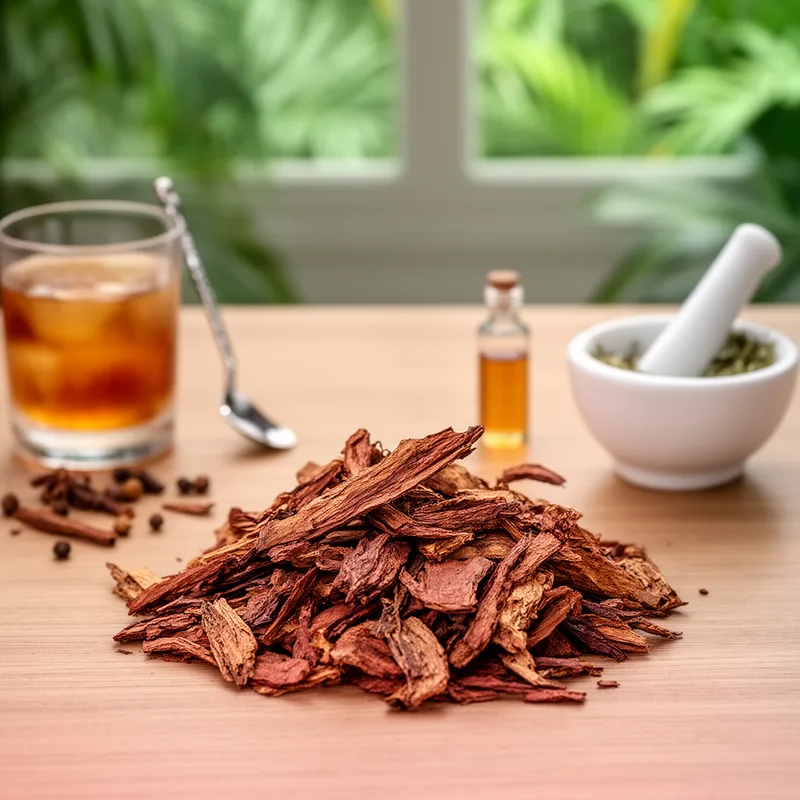
angostura bark
- noun
- /ˌæŋɡəˈstʊərə bɑrk/
- Specialized
- Traditional healers have used angostura bark in remedies for centuries.
Examples
-
The bartender added a pinch of angostura bark to the cocktail for its distinctive flavor.
-
Genuine bitters are often made by infusing angostura bark with alcohol and spices.
-
The herbalist recommended angostura bark for its medicinal properties.
-
I often use angostura bark in my homemade bitters.
-
Genuine bitters are often made by infusing angostura bark with alcohol and spices.
-
The bartender added a pinch of angostura bark to the cocktail for its distinctive flavor.
-
Traditional healers have used angostura bark in remedies for centuries.
Synonyms
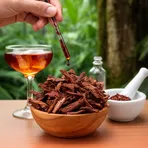
Bitter bark from a South American tree used to flavor drinks and medicines

A South American tree bark used as a spice and traditional medicine
Surface Forms
Morphology
The phrase is compositionally transparent: 'angostura' identifies a specific bitter bark and 'bark' names the tree covering, so 'angostura bark' straightforwardly means the bark of the angostura tree. This noun+noun type/part pattern is a regular, cross-linguistic compounding strategy, so a learner who knows both constituents can infer the MWE's meaning.
Etymology
Angostura bark comes from the town of Angostura in South America, where local healers used the tree's bark to make a strong, 'bitter' medicine and a flavour for drinks. That's why angostura bark now means the bitter tree bark used in medicines, liqueurs, and bitters.

