
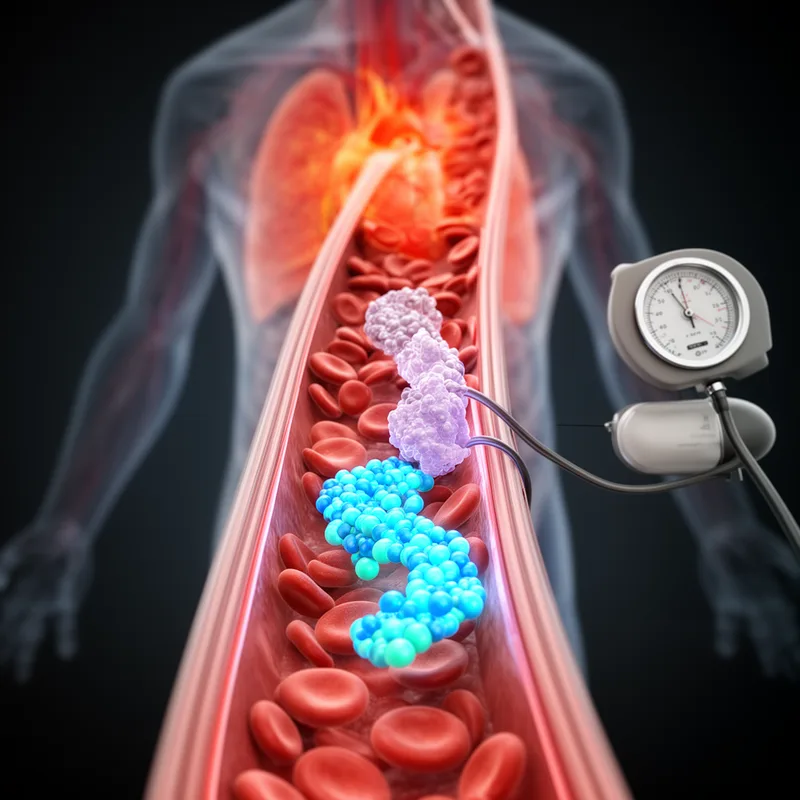
angiotensin I
- noun
- /ˌæn.dʒi.oʊˈtɛn.sɪn aɪ/
- Specialized
- The effect of renin is to change angiotensinogen into angiotensin I.
Examples
-
Angiotensin I is also inactive and has no discernible effect on the body, but is part of the preparatory stage of the response to the loss of blood pressure.
Academic text (2011) -
Angiotensin I is the next stage of the body's response to the low pressure caused by the failing heart.
Academic text (2011) -
Angiotensin I is the next stage of the body's response to the low pressure caused by the failing heart, acting as a precursor to angiotensin I.
-
The effect of renin is to change angiotensin I into angiotensin II, which helps regulate blood pressure.
-
After blood pressure drops, angiotensin I is produced as part of the body's response to restore normal levels.
Surface Forms
Morphology
angiotensin + I
Knowing 'angiotensin' as a blood‑pressure hormone and 'I' as the numeral 'one' lets a learner infer this is a numbered/form variant of angiotensin (a partial, compositional clue). However, the specific information that angiotensin I is a physiologically inactive precursor to angiotensin II is specialized biomedical knowledge that cannot be derived from general word meanings, so the expression is only partly transparent to a B1 learner.
Etymology
Angiotensin I comes from the parts angio- which means 'blood vessel' and -tensin which means 'tension' or 'pressure', so the word hints at a role in 'blood pressure'. The I shows it is the first, inactive form that is later changed into the active angiotensin II, so the name fits its role as the early form in blood pressure control.

