
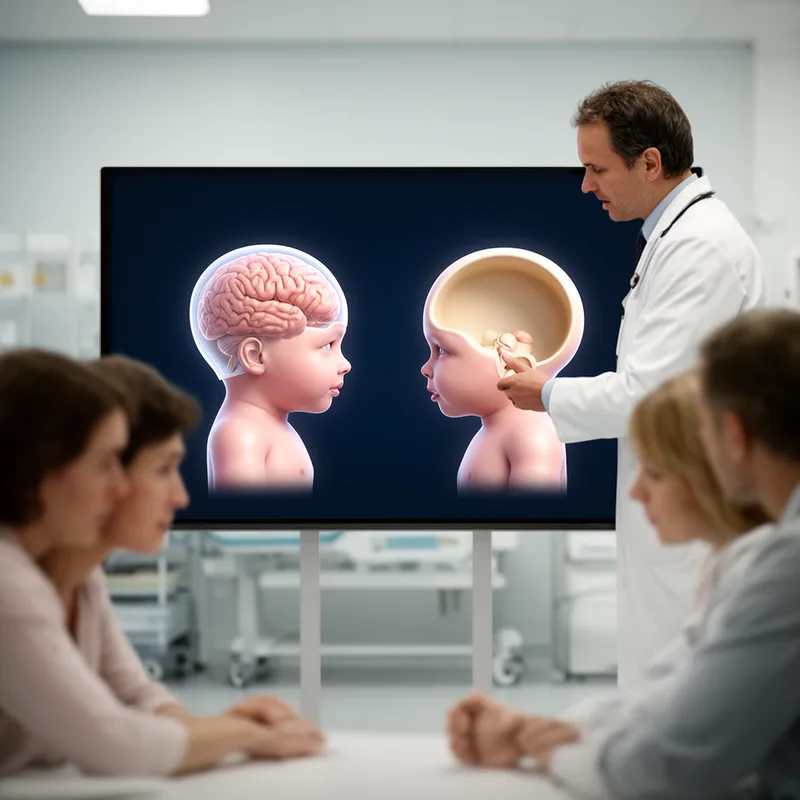
anencephalous
- adjective
- /ˌænənˈsɛfələs/
- Specialized
- Embryonic development can sometimes result in an anencephalous fetus due to neural tube defects.
Examples
-
The baby was born anencephalous.
-
The anencephalous infant was diagnosed shortly after birth.
-
Doctors explained the anencephalous condition to the concerned parents.
-
Doctors diagnosed the anencephalous condition in the early stages of pregnancy.
-
Doctors diagnosed the anencephalous condition in the early stages of pregnancy.
-
Embryonic development can sometimes result in an anencephalous fetus due to neural tube defects.
-
The anencephalous infant was diagnosed shortly after birth.
Synonyms
 1
9.9

Having little or no brain when a baby is born
Surface Forms
Morphology
anencephalous = encephalous (semi-transparent) = an + encephal + ous
The prefix 'an-' indicates absence, and 'encephalous' relates to the brain, but the medical context may not be immediately clear to all learners.
Etymology
Anencephalous comes from Greek parts an- meaning 'without' and encephalon meaning 'brain', where that second part comes from a Greek word for 'head'. So it literally means 'without a brain', which is why doctors use it for a condition when the brain is missing.