
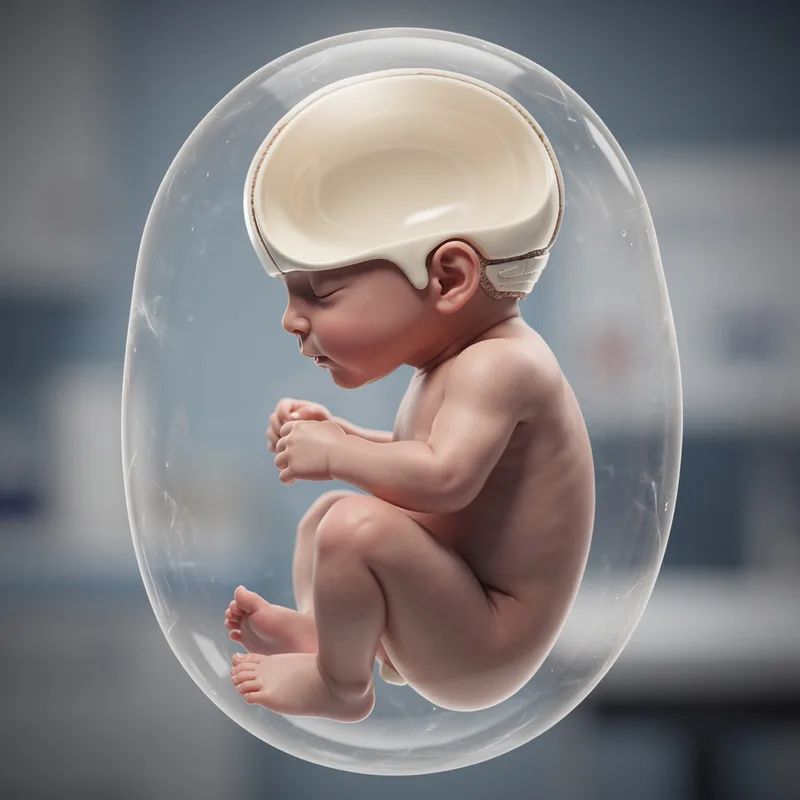
anencephalic
 1
9.9

- adjective
- /ˌænənˈsɛfəlɪk/
- Specialized
- There are many complications that can occur during the delivery of an anencephalic baby; they don't have any skull bones, which are necessary for cervical dilation.
- anencephalic baby
- anencephalic infant
- anencephalic newborn
Examples
-
Therefore, anencephalic children would only rarely be able to donate organs.
Blog text (8) -
Have you ever seen an anencephalic baby?
-
The organs of an anencephalic child can only be removed if the child has been certified dead.
Blog text (8) -
Anencephalic children do not have a rear brain, but they do have a forebrain which usually functions normally at birth.
Blog text (8) -
Take an anencephalic child whose mother dies in childbirth, whose father is dead, and who has no relatives.
Blog text (20) -
She was pregnant with an anencephalic fetus; its head and brain were not formed correctly.
Blog text (34) -
Consider recent proposals from the highest ranks of the American medical profession to allow harvesting of organs from anencephalic infants before death.
Academic text (1996) -
The organs of an anencephalic child can only be removed if the child has been certified dead.
-
To be sure, not all doctors and nurses view anencephalic children as monsters.
Synonyms
Born without most or all of the brain
Surface Forms
Morphology
anencephalic = anencephaly (opaque) = an + encephal + ic
The adjective is a straightforward noun-to-adjective formation: anencephaly + -ic.
Etymology
The word anencephalic comes from a- 'without' and encephalon 'brain'. So it literally means 'without a brain' and is used for babies born with little or no brain.