
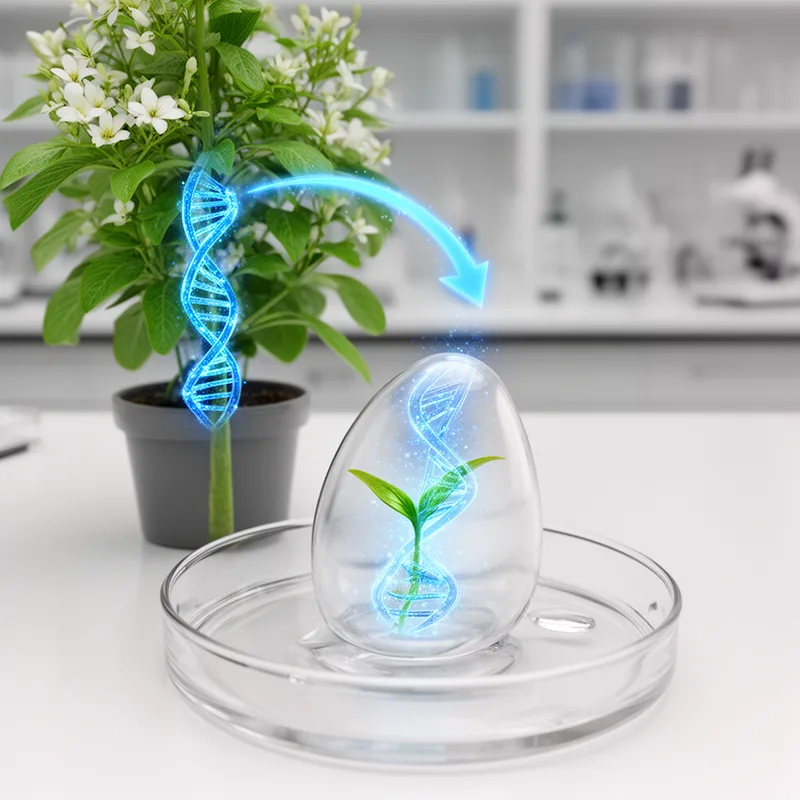
androgenesis
- noun
- /ˌændrəˈdʒɛnɪsɪs/
- Specialized
- A new study revealed that androgenesis can lead to the creation of plants with only the genetic material from the father.
Examples
-
In some species, androgenesis allows embryos to develop without the maternal contribution.
-
Other physical and environmental cues like light conditions, media, stress, and temperature also play an important role in the induction of androgenesis as reported in eggplant and other crops (Rotino et al., 2005; Karami and Saidi, 2010).
Academic text (2015) -
Haploid plant development through androgenesis is highly genotype-dependent.
Academic text (2015) -
Table 1. Media composition for androgenesis (MSA media)
Academic text (2015) -
Hence, BG cultivar Faisalabad was long explored for androgenesis under long days and dark culture conditions, using cold pretreatment of anthers.
Academic text (2015) -
Researchers are studying androgenesis to understand how it affects plant breeding techniques.
Synonyms
An embryo that develops with only the father's genes because the egg's nucleus does not give any genes
Surface Forms
Morphology
Etymology
Androgenesis comes from Greek parts andro- 'male' and -genesis 'birth' or 'origin'. So, androgenesis means a kind of development that starts only from the father's side, an embryo that grows using only the father's chromosomes.

