
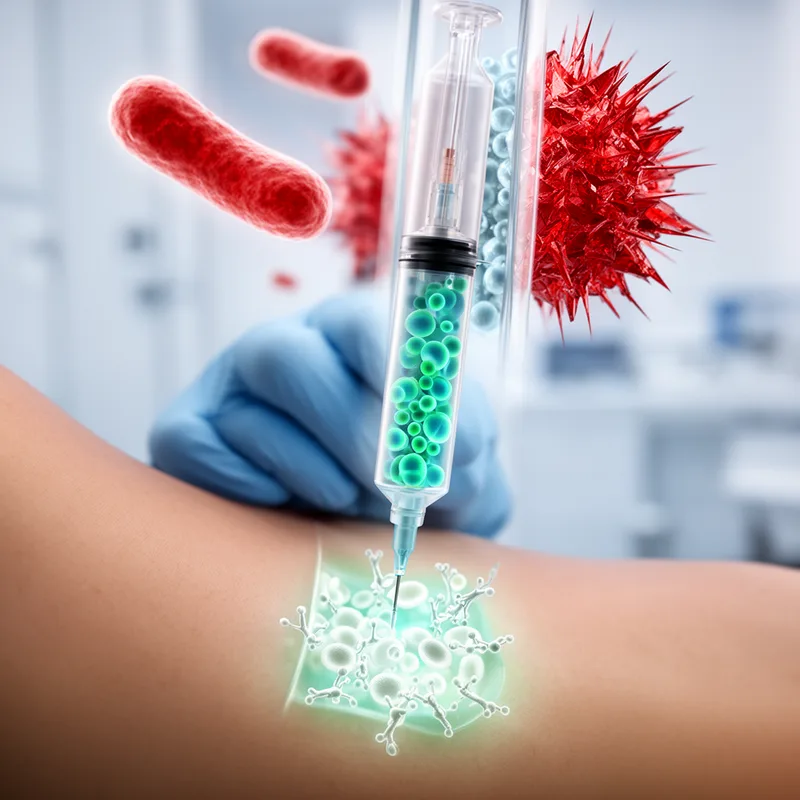
anatoxin


 1
9.9
- noun
- /ˌænəˈtoʊksɪn/
- Specialized
- The vaccine contains an anatoxin to help prevent disease.
Examples
-
Many anatoxins are used in modern immunization programs.
-
The tetanus vaccine contains a purified anatoxin to stimulate immune protection.
-
After exposure, doctors recommended vaccination with a diphtheria anatoxin.
-
Modern vaccines often use an anatoxin rather than the live toxin to ensure safety.
-
Researchers developed an anatoxin to help create immunity against the bacterial infection.
-
The vaccine contained an anatoxin that encouraged the body to produce specific antibodies.
-
Many immunizations use an anatoxin to stimulate the immune response without causing illness.
Synonyms
 1
7.7
A harmless form of a poison made by bacteria that helps the body build protection against a disease
Surface Forms
Morphology
Etymology
Anatoxin joins the prefix ana- and the familiar word toxin, and a helpful way to remember it is that ana- can mean 'changed' or 'made again', so it points to a toxin that has been changed. So an anatoxin is a toxin made harmless but still able to make the body build immunity, which is why it is used in some vaccines.