
amygdalin


 1
9.9
- noun
- /əˈmɪɡdəlin/
- Specialized
- The scientist explained that amygdalin can release cyanide when it is metabolized.
Examples
-
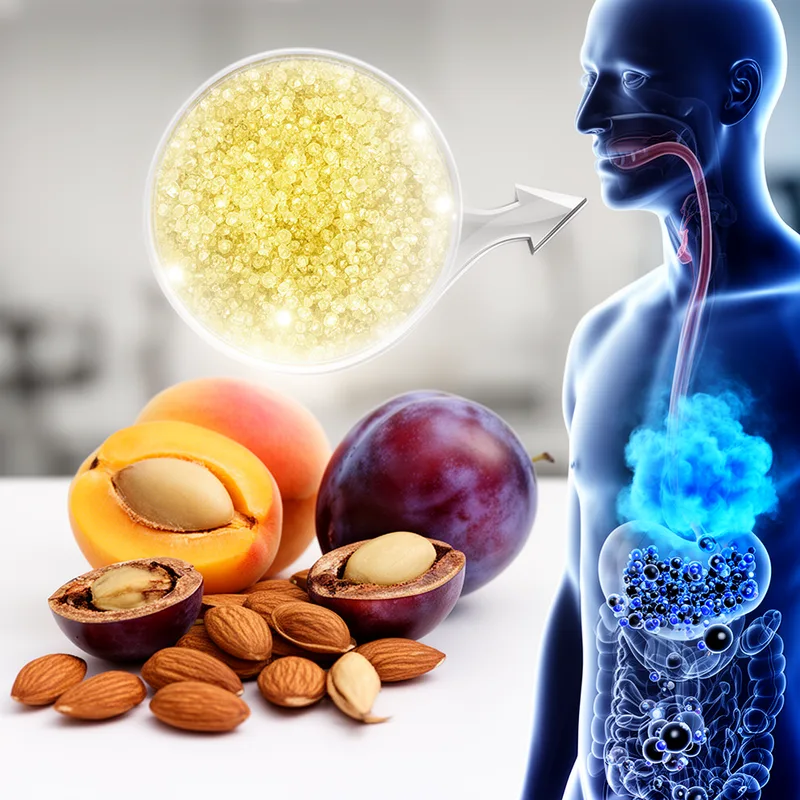
Amygdalin is a compound that can be found in the seeds of apricots and bitter almonds.
-
Sweeter almonds do not contain amygdalin and can be consumed raw or dry roasted to produce roasted almonds.
Blog text (28) -
The difference lies in the toxic chemical, amygdalin, found in the bitter almonds.
Blog text (28) -
Amygdalin.
-
To extract the amygdalin from the bitter almonds, the almonds must be heated.
Blog text (28) -
Consuming large quantities of amygdalin-rich seeds may pose health risks due to its toxicity.
Surface Forms
Morphology
amygdalin = amygdal (opaque) = amygdal + in
The combining form 'amygdal-' is not a familiar standalone English word and the '-in' suffix names a chemical substance, so an average learner cannot reliably infer the meaning from the parts.
Etymology
Amygdalin comes from the Greek root amygdal- meaning 'almond', and it shares that root with the English word almond because the compound is found in bitter almonds and in apricot and plum seeds. It is a bitter chemical that can release cyanide, a poison, so that's why amygdalin refers to this seed compound.