
amphitropous
- adjective
- /æmˈfɪtrəpəs/
- Specialized
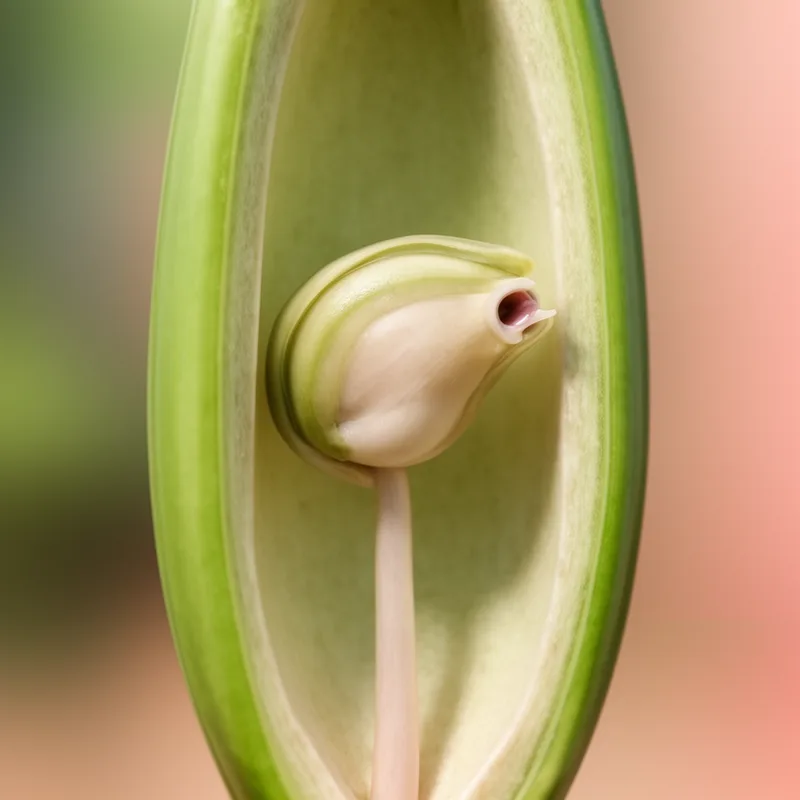
- The amphitropous ovule can be distinguished by its characteristic curved shape.
Examples
-
Botanists observed that many species in this family possess amphitropous ovules.
-
The structure of the seed depends on whether the ovule is amphitropous or of another type.
-
The amphitropous ovule is unique in its structure.
-
In botany, an amphitropous ovule has a specific orientation.
-
Many flowering plants have amphitropous ovules that help in seed development.
-
An amphitropous ovule is known for its distinctive positioning on the stalk.
-
The morphology of an amphitropous ovule plays a crucial role in plant reproduction.
Antonyms

- Specialized
An ovule turned completely upside down on its stalk so its opening is near the base
Compounds

- Specialized
Part of a plant that becomes a seed, bent so its opening and base lie close together
Surface Forms
Etymology
Amphitropous comes from Greek parts amphi- meaning 'around' or 'both', as in amphibian, and tropos meaning 'turn'. So it describes an ovule that is partly turned or bent back around its stalk by about 90 degrees, which is why the word means 'partly inverted' in botany.

