
amphistylic
- adjective
- /æmˈfɪstɪlɪk/
- Specialized
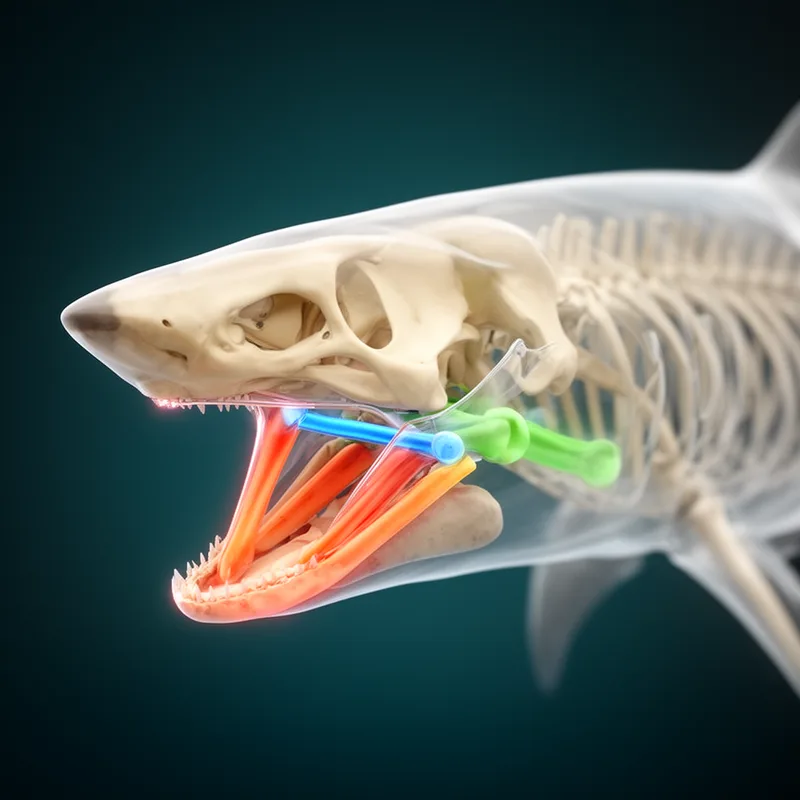
- Some ancient sharks had amphistylic jaws, allowing for both strength and flexibility in feeding.
Examples
-
The fossil record shows that amphistylic jaw suspension was common in early cartilaginous fishes.
-
The amphistylic jaw structure allows for greater mobility in certain fish species.
-
Researchers studied the amphistylic structure to understand the evolution of jaw mechanics in vertebrates.
-
Are there any amphistylic fishes in freshwater habitats?
-
Some ancient sharks had amphistylic jaws, providing a unique balance of strength and flexibility for their feeding habits.
-
The fossil record reveals that many early cartilaginous fishes featured amphistylic jaw suspension, which contributed to their diverse feeding strategies.
-
Scientists analyzed the amphistylic jaw structure in certain fish species to better comprehend the evolutionary adaptations in jaw mechanics.
Surface Forms
Morphology
amphistylic = amphi + stylic
The term is built from technical combining forms ('amphi-' + 'stylic') that are not recognizable to an average B1 learner, so the meaning cannot be reliably derived from the parts.
Etymology
Amphistylic combines amphi- meaning 'both' (as in amphibian) and -stylic from a root meaning 'support' or 'pillar', so it gives the image of something held up on two sides. So, amphistylic describes a jaw that is 'supported on both sides', helping you remember it is held by the skull and a supporting bone.

