

amphibicidal treatment
- noun
- /æmˌfɪbɪˈsaɪdəl ˈtritmənt/
- Specialized
- Scientists are studying the long-term effects of amphibicidal treatment on amphibian populations.
Examples
-
The use of amphibicidal treatment is controversial due to its impact on local ecosystems.
-
Regulations strictly control the application of amphibicidal treatments near protected wetlands.
-
The amphibicidal treatment was effective.
-
Don't forget to apply the amphibicidal treatment before the rain!
-
Many farmers use amphibicidal treatment to control frog populations in their fields.
-
The researchers recommend safer alternatives to traditional amphibicidal treatments to protect biodiversity.
-
The amphibicidal treatment was tested for its effectiveness on invasive species of frogs.
Synonyms
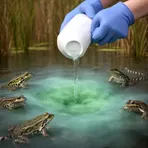
A substance that kills amphibians like frogs or salamanders
Surface Forms
Morphology
amphibicidal + treatment
The compound is compositionally interpretable: amphibicidal can be parsed as amphibian‑killing (amphibian + -cidal) and combined with treatment to yield 'a treatment that kills or controls amphibians.' However, 'amphibicidal' is rare and technical and the suffix -cidal may not be familiar to an average B1 learner, so the meaning is only partially predictable without prior exposure.
Etymology
The name amphibicidal treatment is made from amphibian (animals like frogs that live on land and in water) and -cidal (a part meaning 'to kill'). So it means a chemical or treatment used to kill or control those animals.

