

amnesic aphasia
- noun
- /æmˈniːzɪk əˈfeɪʒə/
- Specialized
- The patient was diagnosed with amnesic aphasia after he could no longer name everyday objects.
Examples
-
Speech therapy is a common treatment for individuals with amnesic aphasia.
-
Many patients with amnesic aphasia struggle to recall names.
-
People with amnesic aphasia may recognize objects but struggle to recall what they are called.
-
She was diagnosed with amnesic aphasia last year.
-
People with amnesic aphasia often find it difficult to name items, even though they can recognize them.
-
After the stroke, he developed amnesic aphasia, which made it hard for him to identify familiar objects.
-
Therapists use various techniques to help patients with amnesic aphasia improve their word recall abilities.
Synonyms

 10
9.1
10
9.1

A condition where a person cannot speak or understand words after brain damage


 1
9.7
1
9.7
A condition that makes it hard to say or recognize common object names

Difficulty naming objects in speech or writing

A condition in which a person cannot name objects or people
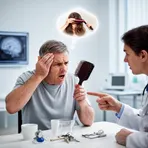
A condition that makes it hard to find names of objects while the person still understands speech
How Severe

Surface Forms
Morphology
The compound is compositionally interpretable: 'amnesic' (relating to memory loss) modifying 'aphasia' (language impairment) yields a language disorder tied to memory problems, so a learner who knows both words can grasp the general idea. However, the precise clinical characterization (a specific naming deficit and inability to recognize names) is specialized and not fully predictable from the constituents, making the expression only partly transparent to B1 learners.
Etymology
Amnesic aphasia comes from the words amnesic (meaning 'memory loss') and aphasia (meaning 'loss of words'). Imagine seeing a chair but your mind cannot find its name; that's why amnesic aphasia means trouble 'naming' objects or 'recognizing' their names.