
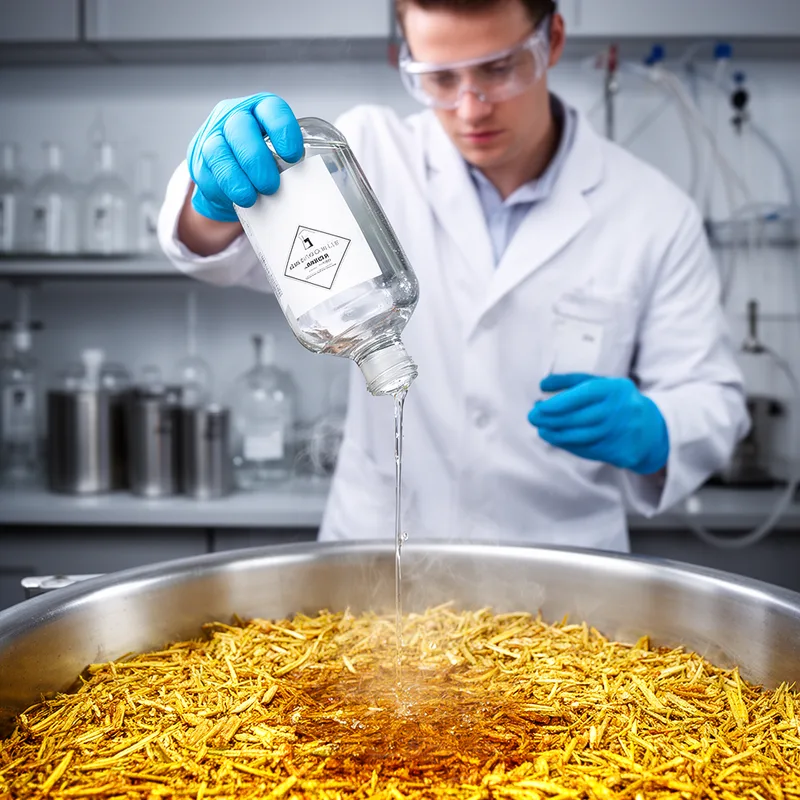
to ammoniate
9.9
To treat something with ammonia or a chemical containing ammonia
- verb
- /əˈmoʊniˌeɪt/
- Specialized
:
amonificar
- The farmer decided to ammoniate the soil to improve its nutrient content for better crop yield.
Examples
-
Filter influent is ammoniated water (1.5-2.0 mg/L, total ammonia as N).
Academic text (1997) -
Some of the horses were sick, and in the wilting heat and ammoniated atmosphere of the lowest holds, several died of suffocation.
Academic text (1999) -
For optimal growth, plants are often ammoniated with nitrogen-rich fertilizers.
-
To enhance the flavor of the dish, the chef chose to ammoniate the sauce with a dash of ammonia.
Synonyms

9.9
To add ammonia to something or change its nitrogen into ammonia
treats or combines directly with ammonia rather than causing conversion to ammonium forms
Surface Forms
ammoniate infinitive
ammoniated past
ammoniated past participle
ammoniating present participle
ammoniates third person singular
Morphology
Etymology
Ammoniate comes from the common chemical name ammonia, which itself goes back to the ancient Egyptian god Ammon because salty materials were once found near his temple. So to ammoniate something is to treat it with 'ammonia' or an ammonium compound, which explains the modern meaning.

