
ametropic
- adjective
- /ˌæməˈtrɒpɪk/
- Specialized
- An ametropic person might find it hard to focus on objects clearly, particularly during reading.
Examples
-
Children who are ametropic may experience difficulties in school due to poor vision.
-
The patient was diagnosed as ametropic and prescribed corrective lenses.
-
Regular eye exams are important for identifying ametropic conditions early.
-
The patient is ametropic and requires corrective lenses.
-
An ametropic individual may struggle to see clearly.
-
Children who are ametropic often have blurry vision, which can affect their learning experience.
-
During the eye examination, the doctor confirmed that he is ametropic and recommended glasses to improve his sight.
Antonyms

How Severe
- Specialized

- Specialized
Surface Forms
Morphology
ametropic = ametropia (opaque) = ametrop + ic
For a learner who knows the noun 'ametropia', the adjective 'ametropic' is a regular relational formation meaning 'relating to ametropia'.
Etymology
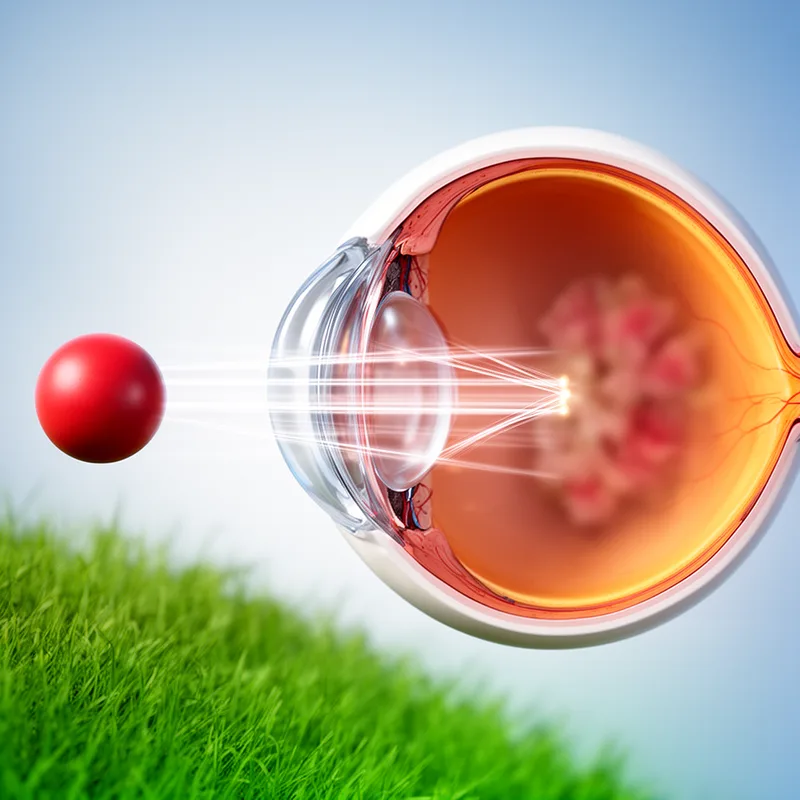
Ametropic comes from Greek parts a- 'not' and metron 'measure', the same root as meter, so imagine an eye that does not 'measure' or focus things in the right place. That's why ametropic describes an eye that fails to put images on the back of the eye, causing blurred vision.

