
americium
 2
9.9
2
9.9

- noun
- /ˌæməˈrɪʃiəm/
- Specialized
 :
americio
:
americio
- Chemical recovery (expressed as average uncertainty, k = 2) for strontium, americium, and plutonium was 95 ± 10%, 88 ± 13%, and 67 ± 13%, respectively.
- radioactive americium
- americium and plutonium
- americium and neptunium
Examples
-
And extrapolating from your americium level... we estimate you have an internal contamination... of six nanocuries of plutonium.
-
Due to the significantly different chemical properties of strontium, americium, and plutonium, a simultaneous sample preparation procedure for matrix removal, pre-concentration, and purification of these radionuclides is challenging.
Academic text (2018) -
They have Americium-241 in them.
-
Americium is produced when plutonium disintegrates.
-
That's americium-241.
-
And other attendees identified several radionuclides of particular concern: cobalt-60, strontium-90, cesium-137, iridium-192, plutonium-238 and -239, and americium-241.
Academic text (2004) -
But being organic doesn't mean the food isn't contaminated with barium, cesium, strontium, americium, and many other radioactive isotopes, not to mention lead, arsenic, and so on.
Blog text (23) -
Lower chemical recovery of americium and plutonium could be attributed to the matrix effects of the HPIC eluents on the microprecipitation efficiency, as no further purification of the radionuclide was carried out before microprecipitation.
Academic text (2018) -
LWR SNF is still about 95% fissionable or fertile isotopes; it's some of those (various isotopes of plutonium, americium, and curium).
Blog text (22) -
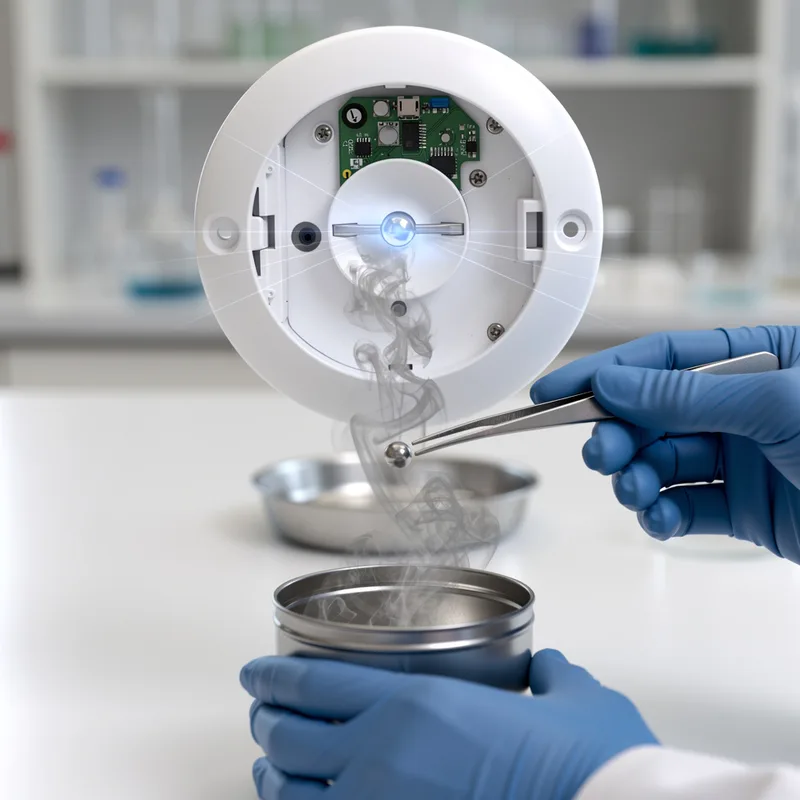
Smoke detectors contain trace amounts of americium-241, which helps to detect smoke effectively.
Synonyms
 1
9.9
1
9.9
A chemical symbol used for americium, a man-made radioactive metal

A radioactive metal called americium used in smoke detectors
Surface Forms
Morphology
Etymology
The word americium was named after the continent America, and the ending -ium marks it as a metal, just like calcium or aluminium. That's why americium is the name for an artificial, radioactive metal made by scientists and used in things like smoke detectors.