
amebic dysentery
 1
7.7
1
7.7

- noun
- /əˈmiːbɪk ˈdɪsənˌtɛri/
- Specialized
- Amoebic dysentery is often spread through drinking contaminated water during travel.
- died of amebic dysentery
Examples
-
Almost everyone who went to the Congo then had a struggle to avoid dying of malaria, amoebic dysentery, sleeping sickness, and other all-too-well-known tropical ailments.
Academic text (1990) -
Rather than wait for samples to get back from the lab, they just treat for amoebic dysentery anyway.
Blog text (14) -
I've also got no metronidazole, and this child has got amebic dysentery!
-
Symptoms progress to mucousy and bloody stools, which is then referred to as "amoebic dysentery."
Academic text (2012) -
And Flagyl, a hardcore antibiotic typically prescribed for amoebic dysentery and other nasties, is also taken after meals.
Blog text (14) -
Travelers should be cautious of their food and water to avoid contracting amoebic dysentery.
-
Symptoms of amoebic dysentery include severe diarrhea and abdominal pain, often leading to dehydration.
Synonyms
 15
7.9
15
7.9
A serious disease of the intestines that causes severe diarrhea with blood and mucus
 1
9.9
1
9.9
An infection by tiny germs called amoebas that causes diarrhea and stomach pain

An infection caused by tiny one-celled amoebae that makes the stomach hurt

An infection of the intestines caused by amoebas
Surface Forms
Morphology
The phrase is fully compositional: 'amebic' specifies that the condition is related to amoebae and 'dysentery' names the intestinal disease, so a learner who knows both constituents can infer it is dysentery caused by amoebae. This modifier+noun medical pattern is common cross-linguistically and follows regular English formation, making it transparent to B1 learners who know the parts.
Etymology
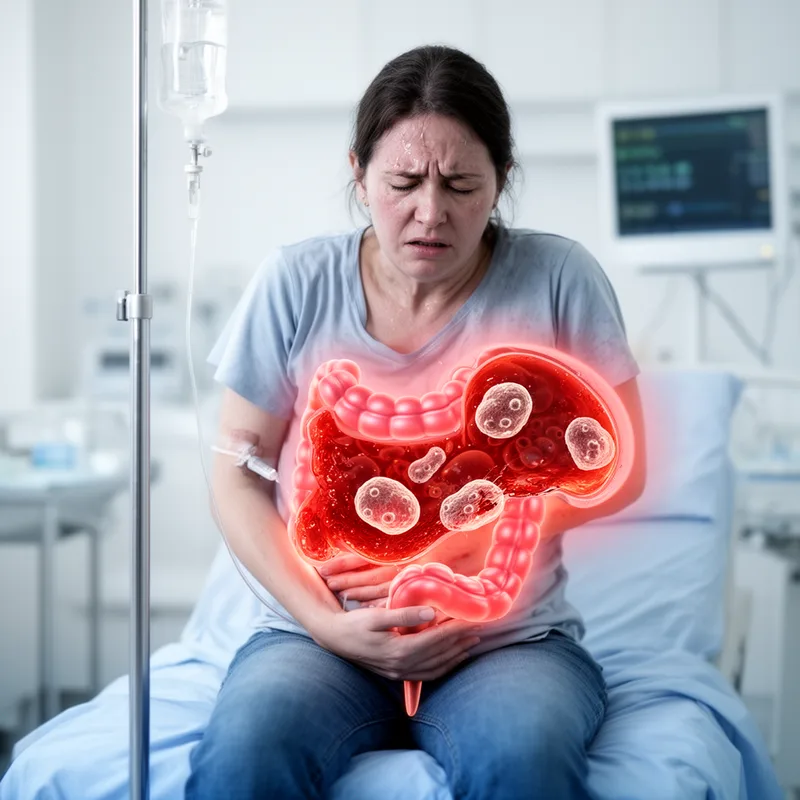
Amebic dysentery comes from tiny single-celled creatures called amebas and the word dysentery, which means 'severe diarrhea'. So the image is of small amebas in the gut causing bad diarrhea, and that is why the name refers to this serious intestinal infection.