
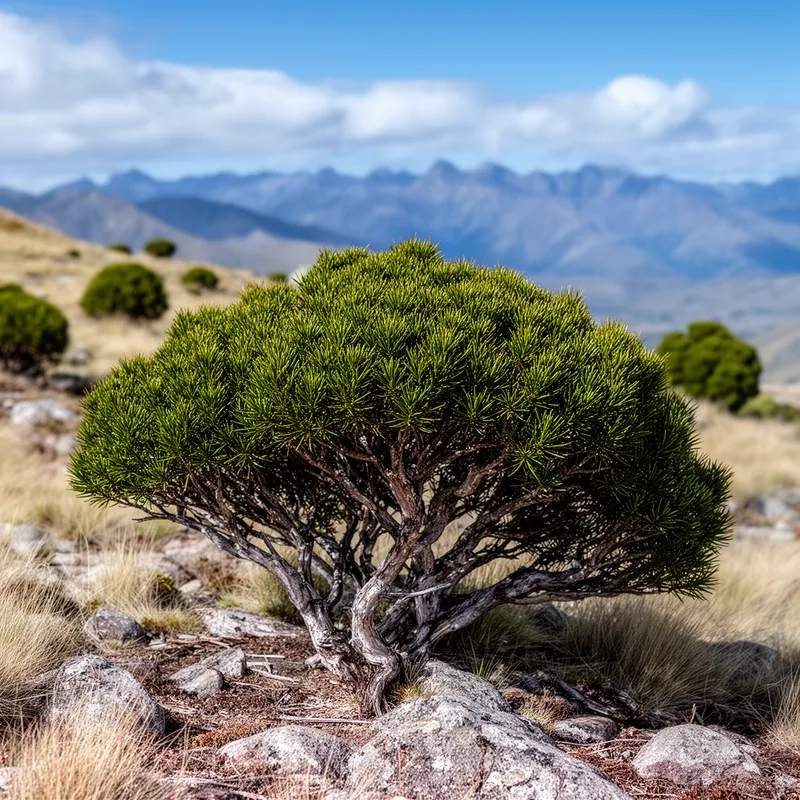
alpine totara
- noun
- New Zealand
- The alpine totara thrives in the harsh, windy conditions of New Zealand's high country.
Examples
-
Hikers admired the gnarled branches of the alpine totara scattered across the mountain slopes.
-
Conservationists are working to protect the unique ecosystem supported by the alpine totara.
-
The alpine totara thrives in harsh mountain climates.
-
Many alpine totaras grow along the hiking trails.
-
Conservationists are working to protect the unique ecosystem supported by the alpine totara.
-
Hikers admired the gnarled branches of the alpine totara scattered across the mountain slopes.
-
The alpine totara thrives in the harsh, windy conditions of New Zealand's high country.
Synonyms
A low, spreading evergreen shrub from the mountains of New Zealand
A shrub from New Zealand with thin leaves like needles and a bushy shape
Surface Forms
Morphology
The phrase is a straightforward modifier + noun combination: 'alpine' specifies high‑mountain habitat and 'totara' names the tree species, so a learner who knows both words can infer it is a totara that grows in alpine areas (i.e. a mountain form, often stunted). This compositional pattern is common cross‑linguistically, making the meaning predictable from the constituents.
Etymology
Alpine totara comes from the words alpine (meaning 'high mountains') and totara (a native New Zealand tree), and it paints the picture of a small, twisted totara clinging to rocky slopes. That's why the name refers to the low, spreading mountain shrub rather than the tall forest tree.

