
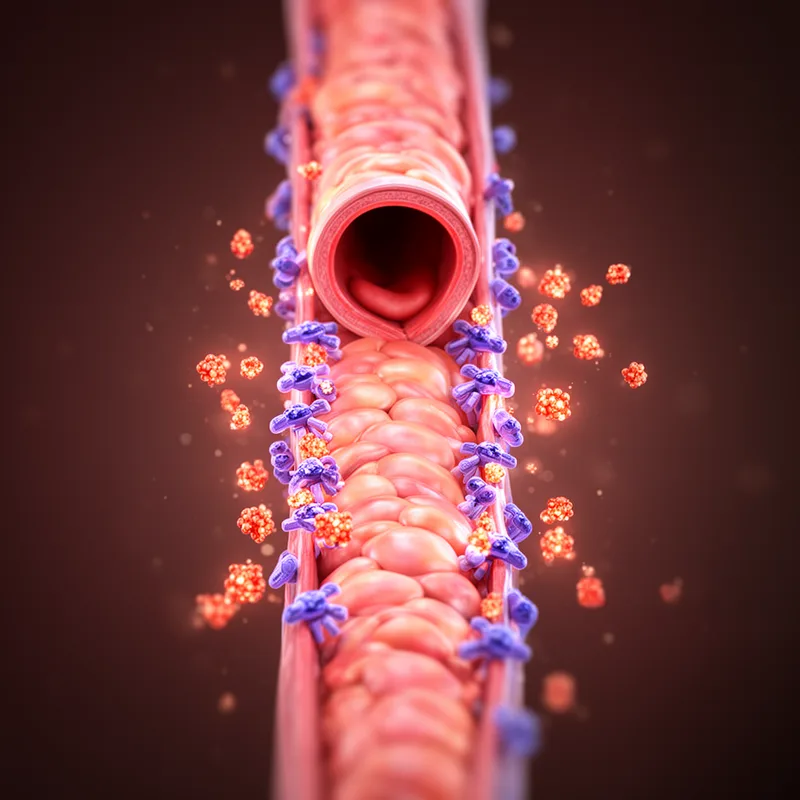
alpha-adrenoceptor
- noun
- /ˈælfə əˈdrɛnəˌsɛptər/
- Specialized
- Stimulation of the alpha-adrenoceptor leads to constriction of blood vessels in peripheral tissues.
Examples
-
Certain medications work by blocking the alpha-adrenoceptor to lower blood pressure.
-
Researchers are studying how the alpha-adrenoceptor influences the contraction of smooth muscle cells.
-
The alpha-adrenoceptor plays a crucial role in blood pressure regulation.
-
Researchers are studying alpha-adrenoceptors for their effects on heart function.
-
Certain medications work by blocking the alpha-adrenoceptor to lower blood pressure.
-
Researchers are studying how the alpha-adrenoceptor influences the contraction of smooth muscle cells.
-
Stimulation of the alpha-adrenoceptor leads to constriction of blood vessels in peripheral tissues.
Synonyms

A protein on nerve and blood vessel cells that reacts to body chemicals to make vessels narrow and muscles contract

A part on nerve cells that makes blood vessels and muscles in organs tighten
Surface Forms
Morphology
alpha-adrenoceptor = adrenoceptor (semi-transparent) = alpha + adreno + receptor
The prefix 'alpha' clearly marks a subtype, but 'adrenoceptor' is a technical term built from the combining form 'adreno-' and 'receptor', so full understanding requires domain knowledge.
Etymology
Alpha-adrenoceptor breaks into alpha- meaning 'first' or 'primary', adreno- from adrenaline, the body's 'fight-or-flight' chemical, and -receptor meaning 'a receiver'. So an alpha-adrenoceptor is a 'first' or special kind of 'receiver' for adrenaline-like signals, which is why it makes blood vessels tighten and smooth muscles contract.

