
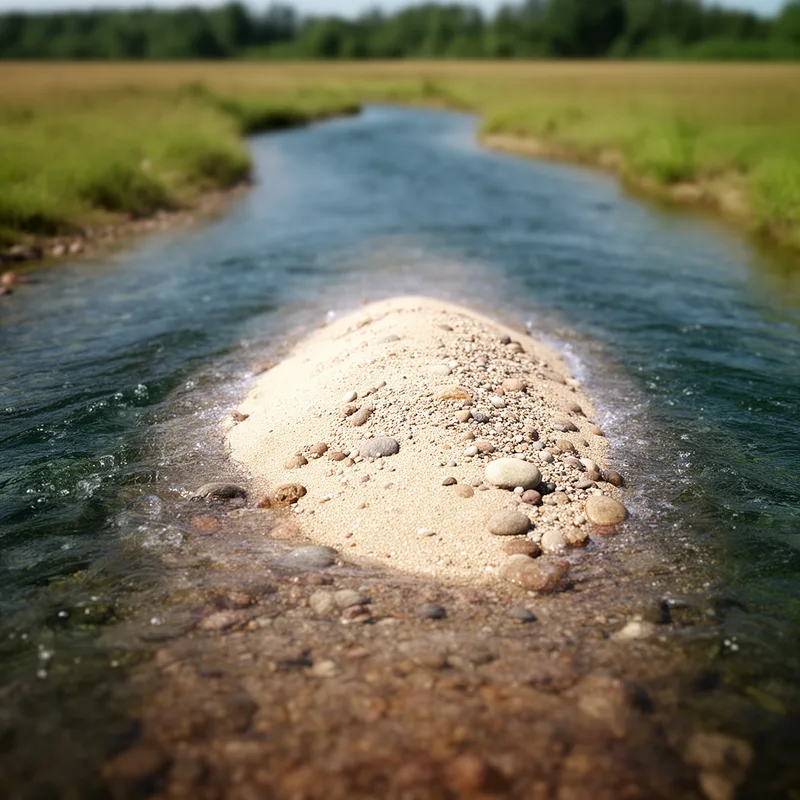
alluviation
- noun
- /əˌluːviˈeɪʃən/
- Specialized
- Regions prone to alluviation often have rich soil, making them ideal for agriculture.
Examples
-
The river experienced significant alluviation, causing new layers of sediment to build up along its banks.
-
After the flood, scientists studied the alluviation in the valley to understand how the landscape had changed.
-
Archaeology, moreover, demonstrates the presence of significant alluviation, with the Roman Forum of the imperial period separated from the stratum of the archaic period by several meters of alluvial deposits (Quilici 1979).
Academic text (2008)
Synonyms

 2
6.0
2
6.0

Small solid pieces settle and build up at the bottom of a liquid
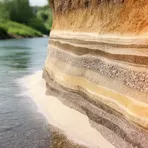
Material like sand left in layers by water or wind
Surface Forms
Morphology
alluviation = alluviate (opaque) = alluvi + ation
The word is a technical nominalization built on a rare stem and is not readily recoverable from familiar modern English parts by an average learner.
Etymology
Alluviation comes from Latin parts like alluv- (from ad- 'to' + luere 'to wash'), giving the picture of water washing soil and stones into one place. That's why alluviation means the process of sediments, like sand and gravel, being moved and left by water.