

allice shad
- noun
- Archaic
- The allice shad migrates upstream to spawn in European rivers each spring.
Examples
-
The decline of the allice shad population is a concern for conservationists.
-
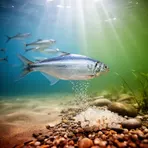
The allice shad is known for its silvery body.
-
Fishermen once relied heavily on the allice shad during its seasonal runs.
-
Many allice shads migrate upstream to spawn.
-
Fishermen once relied heavily on the allice shad during its seasonal runs.
-
The allice shad migrates upstream to spawn in European rivers each spring.
-
The decline of the allice shad population is a concern for conservationists.
Synonyms


 1
9.9
A silvery fish like a herring that moves from the sea into rivers to lay eggs

A large European fish that moves from the sea into rivers to lay eggs

A fish that lives in Europe and swims from the sea into rivers to lay eggs

A fish like a small herring that lives in European rivers and seas and swims upstream to lay eggs
Surface Forms
Morphology
This is a straightforward compound noun where the overall meaning (a kind of shad) is directly built from the constituents 'allice' (a fish) and 'shad' (a herring-like fish). A B1 learner who knows both words would readily infer it refers to a specific species of shad, so the expression is compositionally transparent.
Etymology
Allice shad may come from an old sea word like 'alose' that people once used for shad. Picture a shiny silver fish making long trips from the sea into rivers each spring, and that image helps explain why the name is used for a fish that returns to rivers to spawn.