
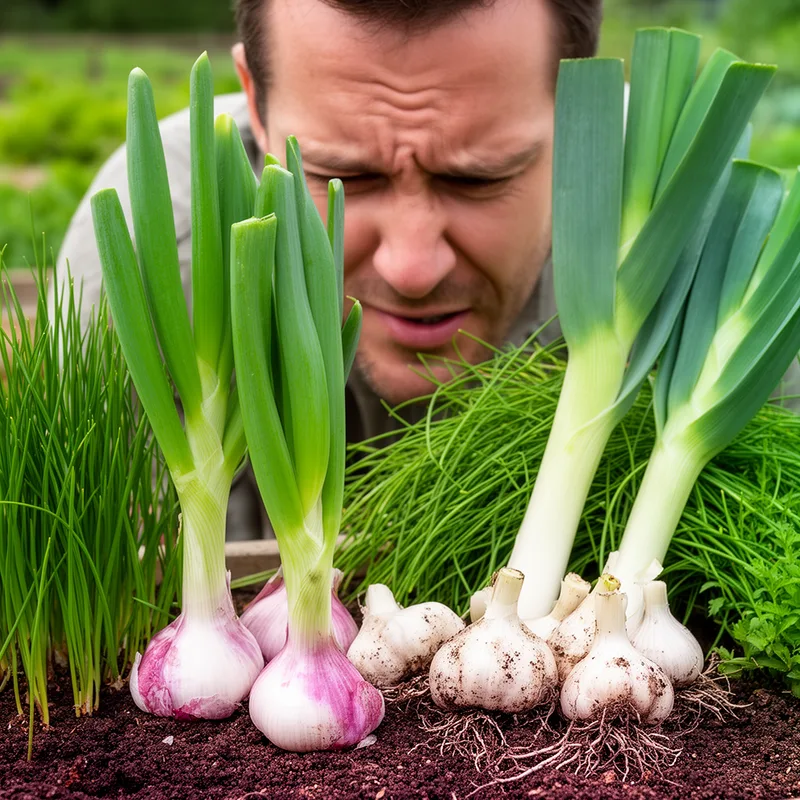
alliaceous plant
- noun
- /ˌæl.iˈeɪ.ʃəs plænt/
- Specialized
- The garden included several alliaceous plants such as onions, garlic, and chives.
Examples
-
The pungent smell of alliaceous plants is unmistakable, especially during harvest season.
-
Many alliaceous plants are used in cooking.
-
Some people are allergic to the distinctive chemicals found in alliaceous plants.
-
The alliaceous plant has a strong smell.
-
The garden included several alliaceous plants such as onions, garlic, and chives.
-
The pungent smell of alliaceous plants is unmistakable, especially during harvest season.
-
Many alliaceous plants are used in cooking to enhance flavor.
How Pungent


Surface Forms
Morphology
The noun phrase simply combines the adjective 'alliaceous' (relating to a garlic/onion-like scent) with 'plant', so its meaning — a plant with a garlicky/oniony smell, typically from the onion family — is directly derivable from the parts. This is a straightforward adjective+noun composition following normal English compounding patterns, so a B1 learner who knows both constituents would understand it.
Etymology
Alliaceous plant comes from the Latin word 'allium', the old name for garlic and onions. The part alliaceous points to plants with bulbs and a strong, sharp smell, so it now means a plant of the 'onion' family with a strong, sharp smell.