
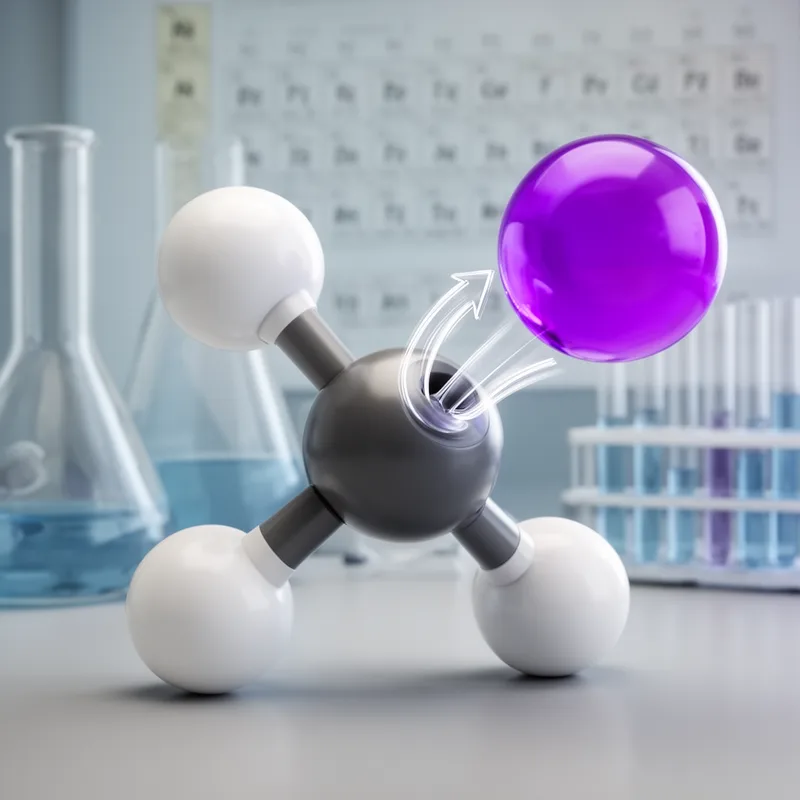
alkyl halide
- noun
- /ˈæl.kɪl ˈheɪ.laɪd/
- Specialized
- An alkyl halide can be synthesized by reacting an alkane with chlorine or bromine gas.
Loading YouTube…
Watch on YouTubeSo when you attack alkyl halides, it's because of the low LUMO.
- So when you attack alkyl halides, it's because of the low LUMO.
Examples
-
So when you attack alkyl halides, it's because of the low LUMO.
-
For example, could you use an alkyl halide RCL?
-
In organic chemistry, an alkyl halide is commonly used as a solvent in reactions.
-
Many pharmaceuticals are developed from alkyl halides due to their reactivity in forming new compounds.
Synonyms
A chemical made when hydrogen atoms in a simple carbon chain are replaced by chlorine or bromine
Surface Forms
Morphology
The noun is directly built from two technical constituents: 'alkyl' (an aliphatic hydrocarbon group) and 'halide' (a compound containing a halogen). If a learner knows those constituent meanings, the combined meaning — a halogen-containing organic species derived from an alkyl group — is predictable, so the compound is morphologically transparent within the chemistry domain.
Etymology
Alkyl halide comes from two parts: alkyl, from alkane, meaning a piece made of carbon and hydrogen, and halide, meaning a part where a 'halogen' atom like chlorine takes the place of a hydrogen. So the name literally shows a carbon chain with a halogen attached, which is why it means an organic molecule with a halogen instead of a hydrogen.

